If you own one of the thousands of post-war tract homes across North Orange County, your plumbing is telling a story about its age. Many of these houses went up in the 1950s and 60s, and the copper pipes threaded through their walls and slabs are now well into their sixth or seventh decade of service.
That is right about when a specific problem starts showing up: the copper pinhole leak. It is small, quiet, and easy to miss until a water stain or a startling water bill forces the issue. Homeowners across Buena Park, Fullerton, Cypress, and La Palma are running into it as their neighborhoods hit this milestone together.
This is a local guide to a very local problem. We will cover why North OC's copper is failing now, the early warning signs worth watching, and what to do the moment you suspect one, so a pinhole does not turn into an open wall and a mold remediation project.
Why North OC's Copper Is Failing Now
Copper plumbing is durable, and that is exactly why builders used it. But it does not last forever, and several factors common to our area are shortening its life all at once.
- Age: Pipes installed in the 1950s and 60s are simply reaching the end of their expected service life. Decades of water flow eventually wears them thin from the inside.
- Hard water: Southern California's mineral-heavy water is tough on plumbing. It scales the inside of pipes and contributes to the corrosion that eats through copper walls.
- Water chemistry and velocity: High water pressure and turbulent flow at bends and fittings can erode copper from within, creating weak spots.
- Slab routing: In slab-foundation homes, pipes run through and under concrete, where a failure is harder to spot and harder to reach.
When you put an entire tract of same-age homes on the same water supply, it is no surprise that neighbors start comparing leak stories around the same time.
What a Pinhole Leak Actually Is
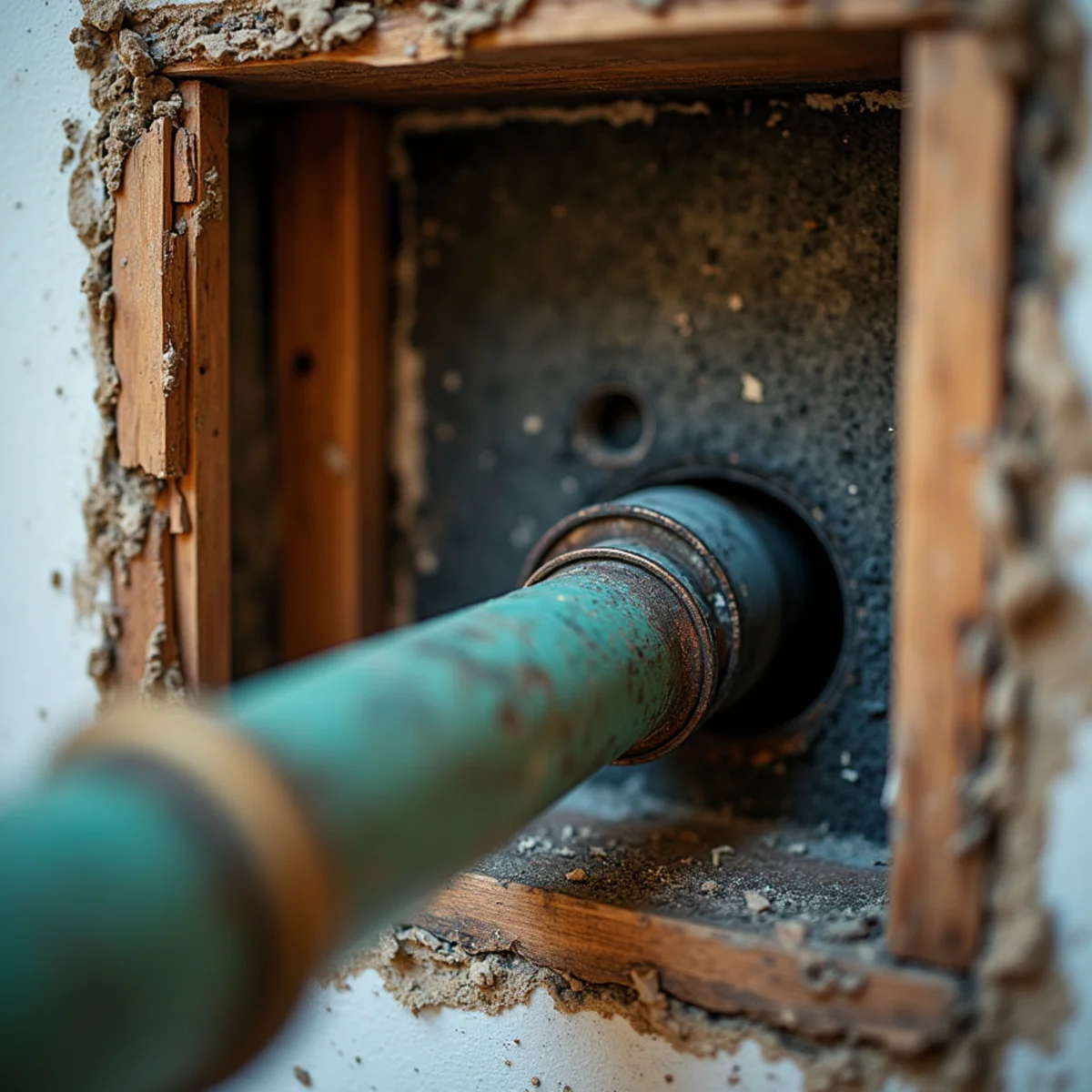
A pinhole leak is exactly what it sounds like: a tiny hole that corrosion has worn through the wall of a copper pipe. It usually starts on the inside of the pipe and works outward, so the first sign is often not a dramatic spray but a slow weep.
That small size is what makes these leaks so damaging. A pinhole can drip inside a wall or under a slab for weeks or months before anything visible appears. All that time, water is soaking into drywall, framing, and insulation, which is precisely the condition mold needs to take hold.
By the time most homeowners notice, the pipe repair is the easy part. The bigger job is drying out and repairing the water-damaged drywall and structure that the hidden leak left behind.
Early Warning Signs Worth Watching
Catching a pinhole leak early is worth a lot. These are the clues our crews hear about most often, and any one of them is worth investigating:
- A water bill that climbs for no clear reason.
- The sound of running or trickling water when every fixture is off.
- Warm spots on the floor of a slab home, which can point to a leak on a hot-water line.
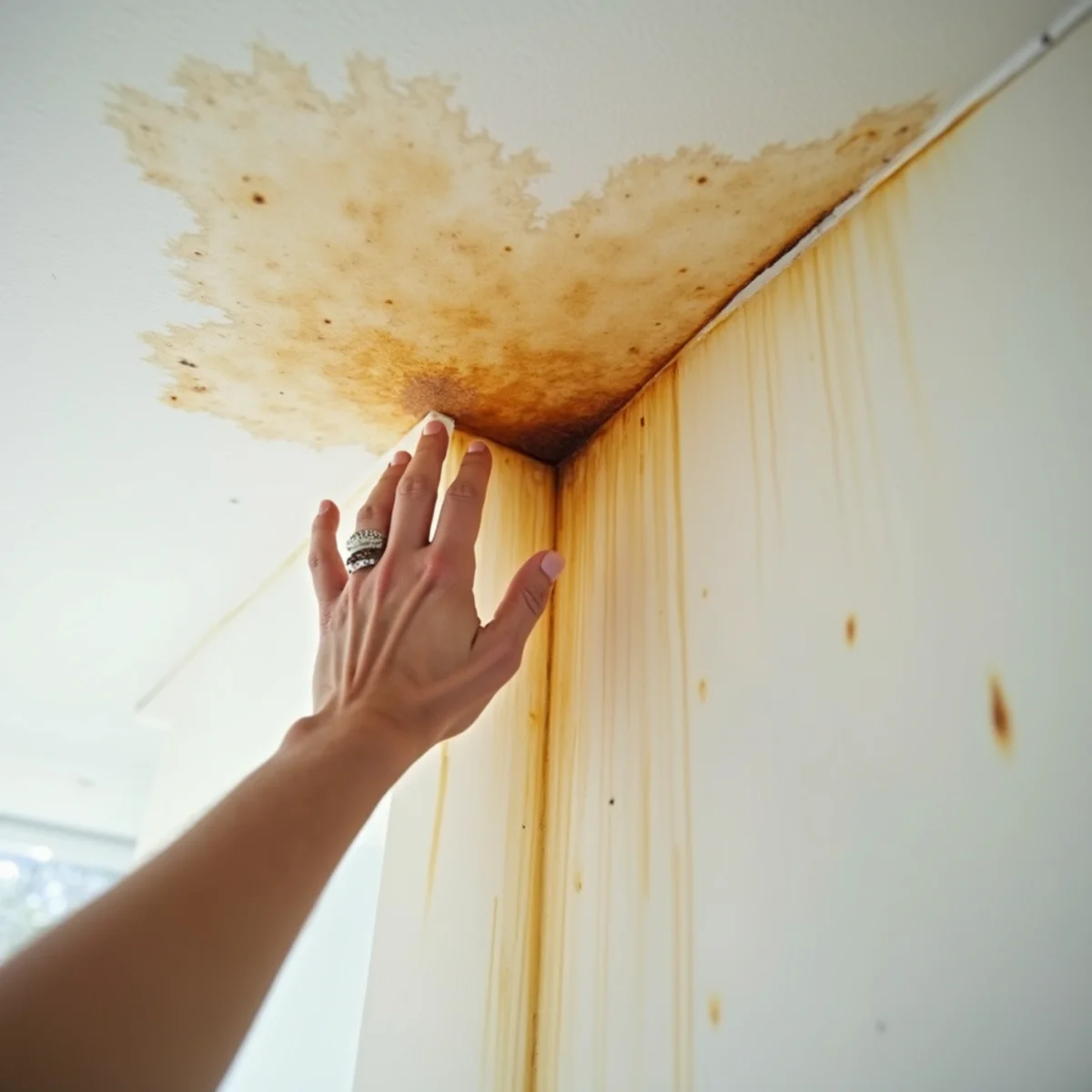
- Stains, bubbling paint, or soft spots on walls and ceilings.
- A persistent musty smell with no visible source.
- Reduced water pressure or discolored, rusty-looking water.
If you notice more than one of these, treat it seriously. Confirming the source early with professional leak detection keeps a small repair from becoming a large one.
Why Slab Homes Raise the Stakes
A pinhole leak in an exposed pipe under the sink is annoying but visible. The same leak in a line running through the slab is a different animal. You cannot see it, and the water has nowhere obvious to go, so it spreads through the concrete and up into flooring and walls.
This is common in our area because so many tract homes sit on concrete slabs with plumbing cast right into or beneath them. A slab leak can quietly warp hardwood, lift tile, and dampen carpet from below long before you connect the dots.
When a leak is under the slab, the response has to be methodical: locate it precisely, access it with as little demolition as possible, and dry the surrounding structure thoroughly. Our slab leak water damage team handles that sequence so the concrete does not stay saturated and feed mold.
What to Do the Moment You Suspect One
Speed protects your home and your wallet. If you think you have a pinhole or slab leak, take these steps:
- Locate your main shutoff valve and know how to use it before you ever need to.
- If water is actively causing damage, shut off the main and stop the flow.
- Take photos of any stains, warping, or pooling water for your insurance file.
- Move furniture and belongings away from the wet area to limit damage.
- Call a professional to pinpoint the source and dry the structure before mold gets started.
Because we know these neighborhoods and these homes, our crews across Fullerton and Buena Park can usually get on site fast, often inside our 60-minute response target on the 24/7 line. The earlier we find the leak, the less of your home we have to open up.
Repair, Repipe, or Wait?
One question always follows a pinhole leak: is this a one-off, or is the whole system due? There is no single right answer, but a pattern is telling. A single leak in an otherwise sound system may be a spot repair. Several leaks over a year or two in the same house usually means the copper is failing throughout, and a repipe becomes the smarter long-term move.
A plumber handles the pipe decision itself. Our role starts the moment water gets loose: extracting it, drying the affected materials to a documented standard, and repairing the damage a leak leaves behind. If you have already had one pinhole leak in a North OC tract home, it is reasonable to stay alert for the next.
Either way, do not let the drying step slide. A repaired pipe in a still-damp wall is an invitation for mold, which is why finishing with proper structural drying matters as much as the plumbing fix.
Frequently Asked Questions
Many local tract homes were built in the same 1950s and 60s era with copper plumbing. Those pipes are now reaching the age where corrosion wears through, and our hard water accelerates it. Same-age homes on the same supply tend to develop leaks around the same time.
A temporary clamp may slow a small, accessible leak, but it is not a lasting fix, and it does nothing about water already inside your walls or slab. A pinhole leak should be properly repaired, and the surrounding structure dried, to prevent mold and further damage.
Warm spots on the floor, the sound of running water with all fixtures off, unexplained high water bills, and damp flooring can all point to a slab leak. Professional leak detection equipment locates it precisely without tearing up the whole floor.
Not necessarily. A single leak may be a spot repair, but multiple leaks over a short period usually indicate the copper is failing throughout. A plumber can advise on repiping, while our team handles drying and repairing any water damage.
Dealing with water damage right now?
Water Damage Buena Park responds 24/7 across Buena Park & North OC.