Drywall drinks water. That is the problem. The gypsum core and paper facing soak up moisture like a sponge and hold it inside your walls, where you cannot see it. The paint may look fine while the wall behind it stays wet. If your walls got soaked, call our 24/7 line so we can find out how far the water actually went.
Wet drywall does not simply dry and recover on its own. As it holds moisture, the paper facing feeds mold, the core softens and crumbles, and the material can lose its strength for good. The paper on drywall is organic — mold can start on it within a day or two of staying damp.
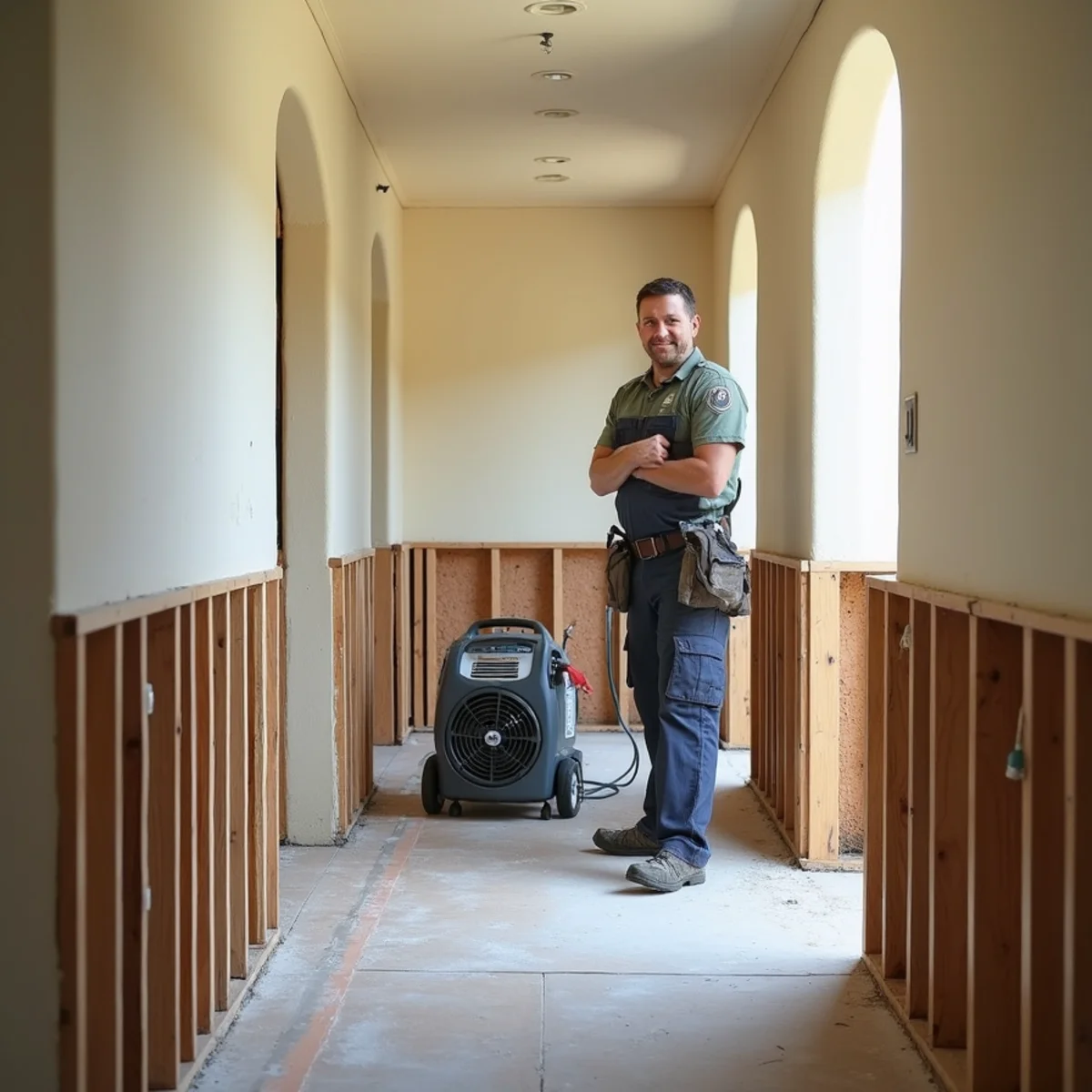
We measure the moisture across your walls, dry what can be saved, and make clean flood cuts to remove what cannot. Where the water was contaminated, or the drywall is swollen and failing, replacing it is faster, safer, and cheaper than fighting to dry it.
We are IICRC-certified, licensed and insured, and locally owned. We follow the S500 standard, document for your insurer, and bill your carrier directly when your policy allows.
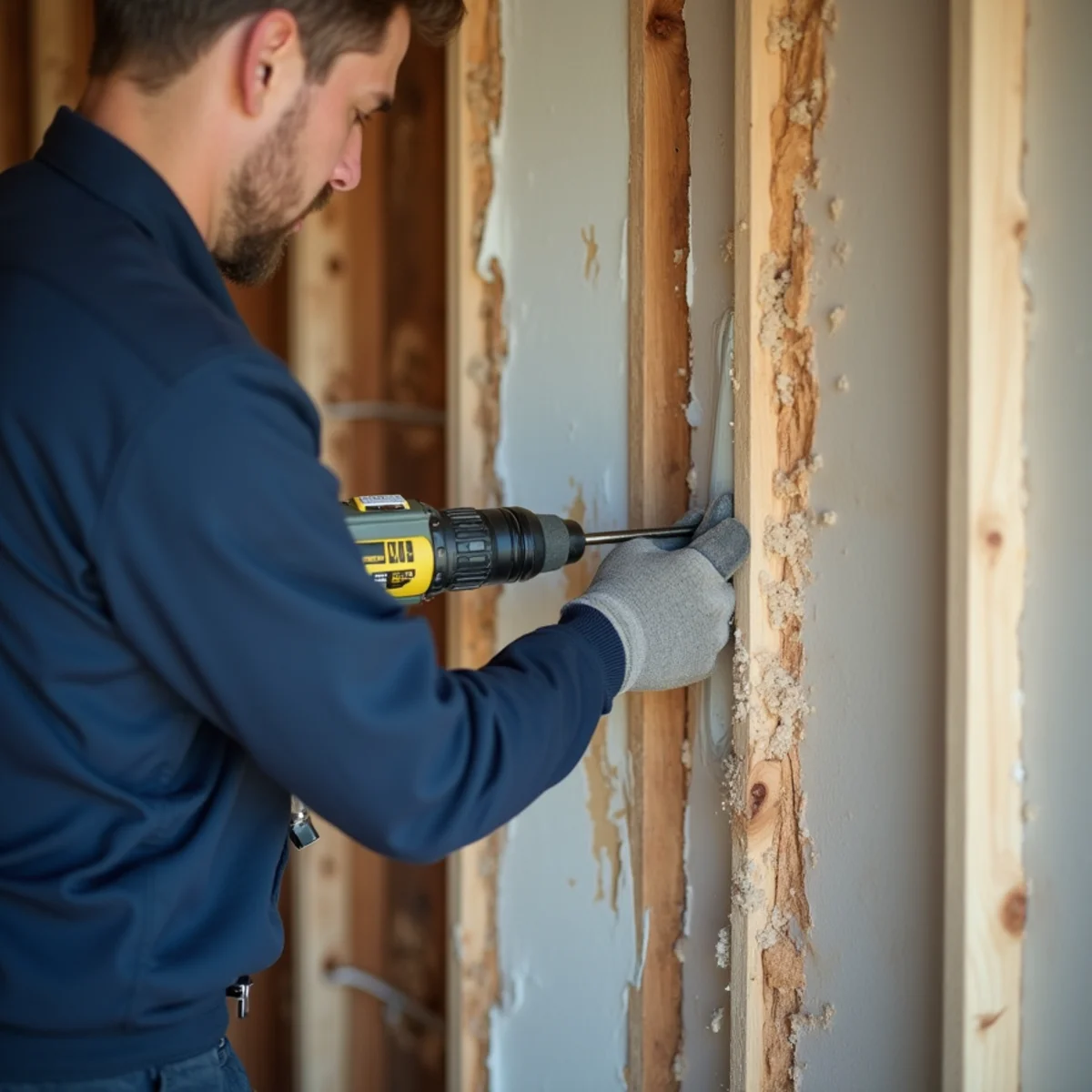
Signs You Need Drywall Water Damage Repair in Buena Park
Water damage rarely announces itself politely. Here's what tends to signal that it's time to call a professional:
- Dark, discolored, or water-stained patches on the wall
- Paint that is bubbling, blistering, or peeling
- Soft, spongy, or crumbling drywall when you press it
- A swollen, bowed, or bulging section of wall
- Baseboards pulling away from the wall or warping
- A musty smell coming from inside the wall
- Mold spotting near the floor line or around outlets
What's Included in Our Drywall Water Damage Repair
Drywall Water Damage Repair with us is a complete, done-for-you service — not a partial fix that leaves you chasing other contractors. Here's what a typical job includes:
- Flood cut performed 12 to 24 inches above the waterline
- Wet baseboards and trim removed to expose the wall cavity
- Wall cavities dried with air movers and dehumidifiers
- Studs and bottom plates checked with a penetrating moisture meter
- Antimicrobial applied to framing before we close the wall
- New drywall, tape, mud, texture, and paint-ready primer
- Photos of the open cavities documented for the adjuster
Why This Matters in Buena Park & North OC
The 1950s and 60s tract homes across Buena Park were built with plenty of drywall over wood framing, and much of it sits on concrete slab. When a slab leak or a pinhole leak in the aging copper plumbing wets the bottom of a wall, the drywall wicks that moisture upward — often a foot or more above where the water actually is. We map that hidden wicking with a moisture meter so the whole wet zone gets addressed.
In the many apartments and condos here, shared walls mean a leak in one unit can soak the drywall in the next. We check both sides of a party wall and coordinate with property managers so the repair is complete rather than cosmetic.
Because so much local plumbing runs under the slab, drywall damage here often starts low and hidden. A baseboard that feels damp or a faint musty smell near the floor is frequently the first sign of a slab or supply-line leak behind the wall. We take those small signals seriously.
Our Drywall Water Damage Repair Process
Our drywall process finds every wet spot, dries what it can, and cleanly replaces the rest.
- 1
Emergency Contact & Rapid Assessment
A real person answers your call 24/7 — never a voicemail. We ask a few quick questions to gauge severity, then dispatch a crew immediately. While you wait, we'll walk you through shutting off the water and safely documenting the damage for your insurer.
- 2
Water Extraction
Our technicians arrive with truck-mounted and portable extraction units to pull out standing water fast — the single biggest factor in limiting damage. We move furniture and belongings to dry areas and stop the spread before it reaches new rooms.
- 3
Drying & Dehumidification
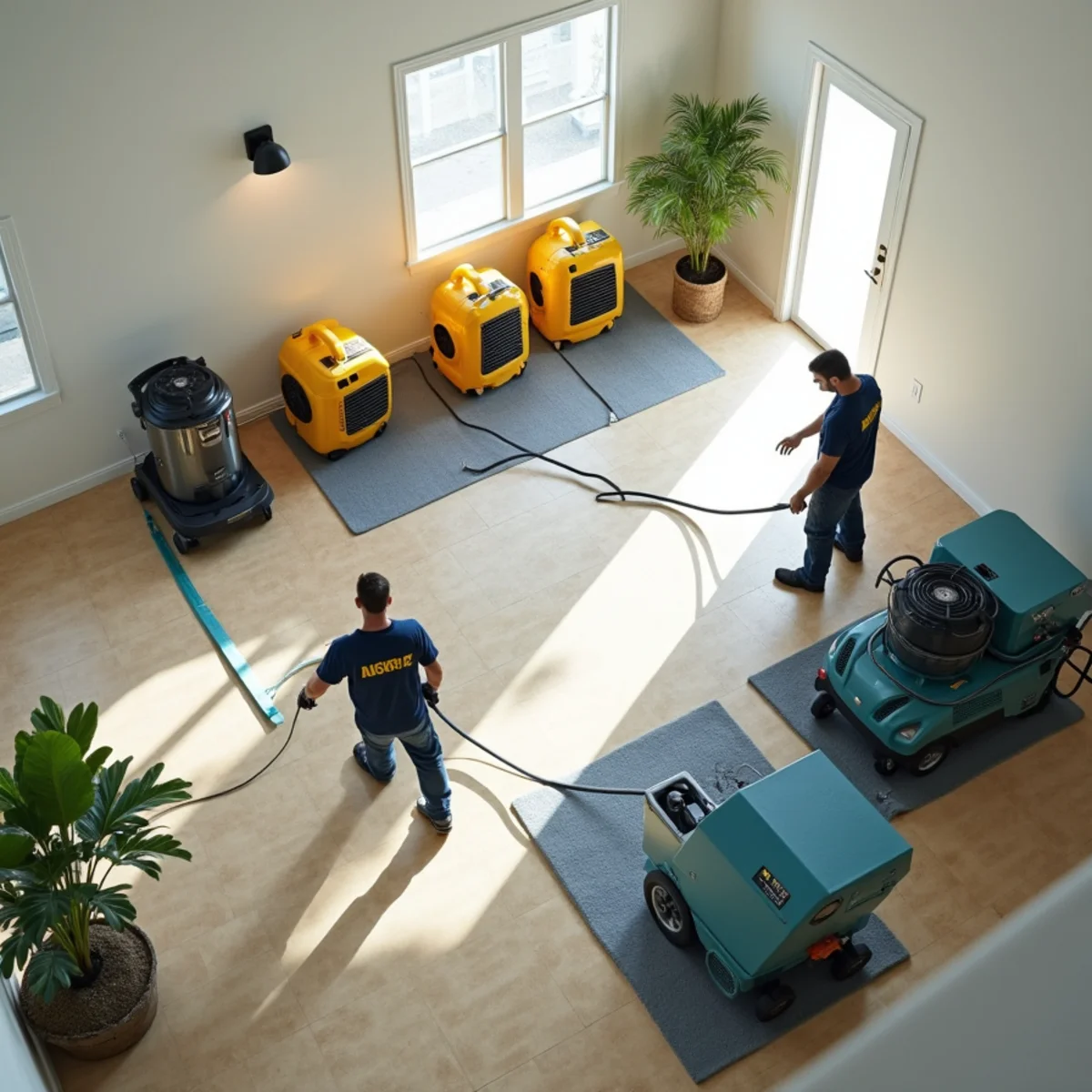
We position industrial air movers and dehumidifiers to dry structural materials from the inside out, then monitor moisture daily with professional meters and thermal imaging so hidden dampness behind walls and under floors doesn't turn into mold.
- 4
Cleaning & Sanitizing
Every affected surface is cleaned with antimicrobial and anti-fungal treatments. For gray- and black-water losses we follow strict IICRC S500 containment, PPE, and disposal protocols to keep your home safe.
- 5
Restoration & Reconstruction
Once your property is dry, we repair or replace drywall, flooring, cabinetry, and paint — and put it back the way it was. One company handles the whole job, from the first extraction to the final coat of paint, so you're never juggling three contractors.
What Affects the Cost of Drywall Water Damage Repair
We give you a clear, upfront estimate after a free on-site assessment — no guessing, no fake numbers. The final figure depends on factors like:
- How far the water wicked up the walls, measured not estimated
- The category of water — clean, gray, or sewage
- Whether the drywall can be dried in place or must be removed
- How much insulation behind the wall is also wet
- Baseboard, texture, and paint matching for the finish
- How quickly work began after the water intrusion
Because we document everything to insurer standards, most of this is typically handled through your homeowner's claim — and we bill your insurance directly.
Need help right now?
Certified crews on standby, 24/7. We'll be there fast.
Drywall Water Damage Repair FAQs
Some of it can be saved. Drywall that got damp from clean water and is dried quickly — within a day or two — often recovers in place with air movers aimed into the wall cavity. Drywall that is swollen, soft, crumbling, or was soaked by contaminated water needs to come out. We test the moisture level to make the call rather than replacing more than necessary.
That is a flood cut, and it does two things. It removes the drywall along the wet zone at the bottom of the wall, and it opens the cavity so we can dry the framing and insulation behind it. Cutting at a clean, straight line a set height off the floor also makes the replacement piece easy to install and finish.
Faster than most people expect. The paper facing on drywall is organic and stays damp, so mold can begin within 24 to 48 hours in the right conditions. That short window is exactly why we push to extract, dry, and cut out ruined drywall quickly rather than waiting to see if it dries on its own.
Often, yes. Wet fiberglass insulation loses its R-value and holds moisture against the framing, which slows drying and invites mold. Once we open the wall, we check the insulation, remove what is soaked, dry the cavity, and install new insulation before the wall is closed back up.
Sometimes. If we reach the wall while it is only lightly wet and no insulation is trapping moisture, we can often dry it in place by pulling the baseboard and pushing warm, dry air into the cavity. When the water sat longer, saturated the insulation, or came from a dirty source, drilling small ventilation holes or removing a lower section of drywall is the honest call. Our moisture meters tell us which path will actually dry the wall cavity, not just the surface.