You wake up to soaked carpet and a sinking feeling. Before you can even start mopping, a bigger question is already forming: will insurance pay for this? The answer hinges on a distinction most homeowners never think about until they are standing in it. Insurers treat "water damage" and "flood damage" as two completely different things, and the words on your policy decide which one you have.
Get the category wrong and you can waste days fighting a claim that was never going to be approved, or miss a deadline on one that would have been. In Buena Park, where a lot of homes sit on 1950s and 60s slab foundations with aging copper supply lines, and where the Coyote Creek channel runs through the area during the November-to-March rains, both scenarios are common. Sometimes they even happen in the same storm.
This guide walks through how carriers define each term, shows a couple of real local examples, and explains the exclusions that trip people up. The goal is to help you figure out which bucket your situation falls into so you take the right steps fast.
How insurers define "water damage"
In insurance language, "water damage" almost always means water that escapes from inside your home or its systems, suddenly and by accident. The classic example is a pipe that bursts without warning. The water originates inside the house, the event is abrupt, and you did not see it coming.
Common covered causes under a standard homeowners policy generally include:
- A burst or ruptured supply line, often an older copper joint that finally gives out
- A failed appliance hose, like the one feeding a washing machine or dishwasher
- An overflowing tub, sink, or toilet (the water itself overflowing, not sewage backing up)
- A water heater that splits and dumps its tank
- Rain intrusion after a covered event tears open the roof, such as wind during a Santa Ana event
The key words carriers lean on are "sudden and accidental." That phrasing is doing a lot of work. It is the reason a pipe that explodes on a Tuesday is usually covered, while a pipe that has been quietly weeping behind the wall for eight months usually is not. If you are dealing with an interior failure like this, it typically falls under standard water damage restoration coverage, though you still need to confirm the specifics with your own policy.
How insurers define "flood damage"
"Flood damage" is the one that surprises people. In the insurance world, a flood is rising surface water from outside that spreads across land that is normally dry, usually affecting two or more properties or acres at once. Think storm runoff, an overflowing creek or channel, or ground water pushing up during a heavy rain.
The official definitions used for the National Flood Insurance Program describe a flood as a general and temporary condition of partial or complete inundation from overflow of inland or tidal waters, or from an unusual accumulation of surface runoff. The short version: if the water came from the ground up and from outside, it is probably a flood, not plain water damage.
Here is the part that catches homeowners off guard. A standard homeowners policy in California does not cover flood damage. It is excluded. To be protected against rising water, you generally need a separate flood policy, most often through the NFIP flood insurance program or a private flood insurer. Local relevance matters here: sections of Buena Park sit near the Coyote Creek flood corridor, and parts of nearby Anaheim carry similar exposure.
A local tale of two leaks
Picture two homes on the same Buena Park street during the same February storm. In the first house, a decades-old copper line under the kitchen gives out overnight and sprays water across the slab until morning. That is sudden, accidental, and internal. It reads as water damage, and a standard homeowners policy would typically respond.
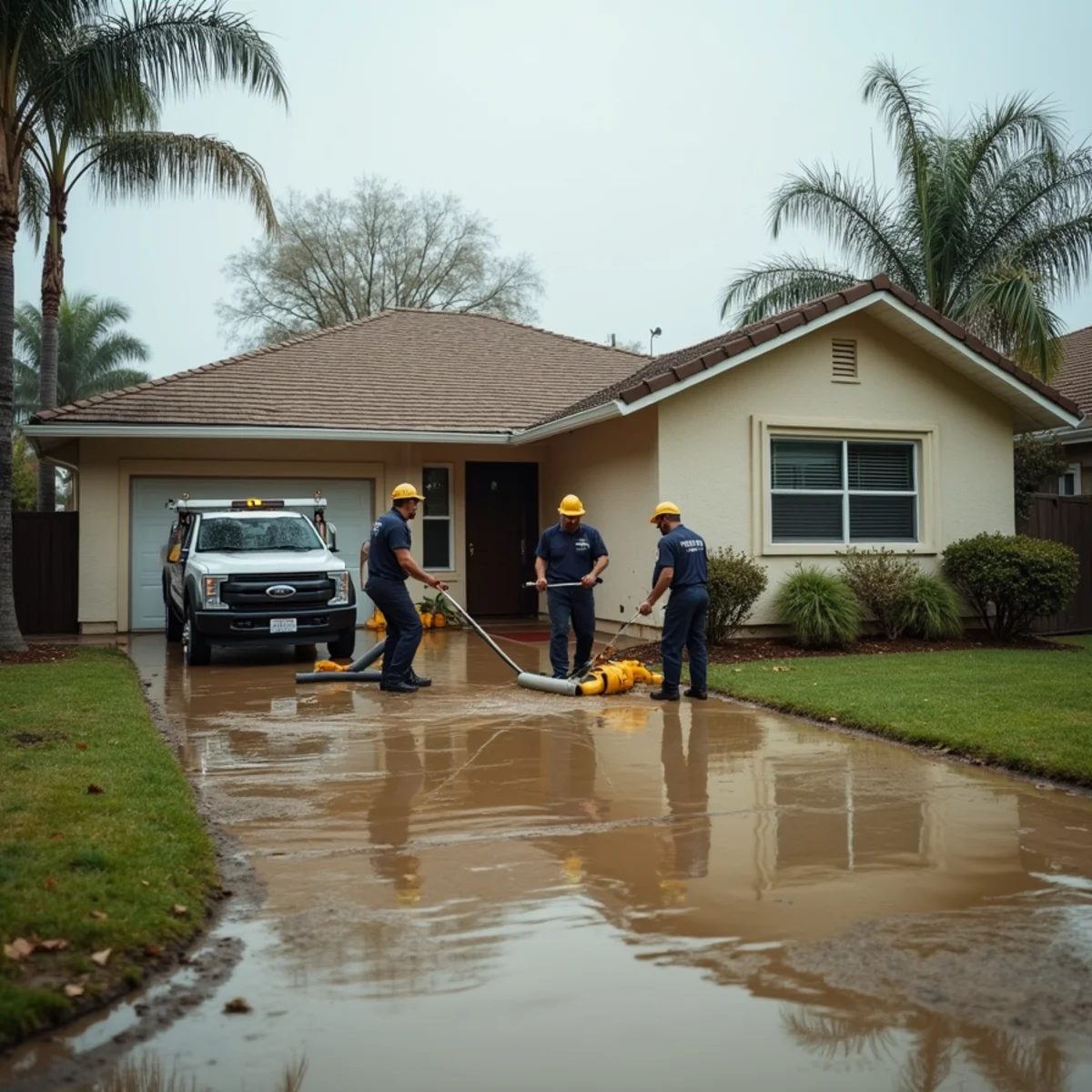
Two doors down, the storm dumps several inches in a few hours, Coyote Creek runs high, and street runoff pushes under the garage door and across the ground floor. Same neighborhood, same night, same muddy mess on the floor. But this water rose from outside and across the land, so it is flood damage. Without a separate flood policy, that homeowner's standard coverage would generally decline the claim.
Same amount of ruined drywall, two very different outcomes, decided entirely by where the water came from. When a creek or storm drain overtops, the response is a flood damage cleanup that treats the water as contaminated and dries the structure to the IICRC S500 standard, which is a different process than a clean burst-pipe job.
The exclusion that costs people the most: gradual leaks
Even on the water-damage side, there is a trap. Standard policies cover sudden losses, not slow ones. A pipe that has been seeping behind a bathroom wall for months, a shower pan that has leaked gradually, or long-term condensation that rots a subfloor is often treated as a maintenance issue, and maintenance is the homeowner's responsibility, not the insurer's.
This hits older Buena Park homes especially hard. Aging copper and galvanized plumbing tends to fail at pinholes and joints, and a pinhole leak can go unnoticed for a long time before the damage surfaces. By the time you see the stain or smell the must, the carrier may argue the problem was gradual and deny it.
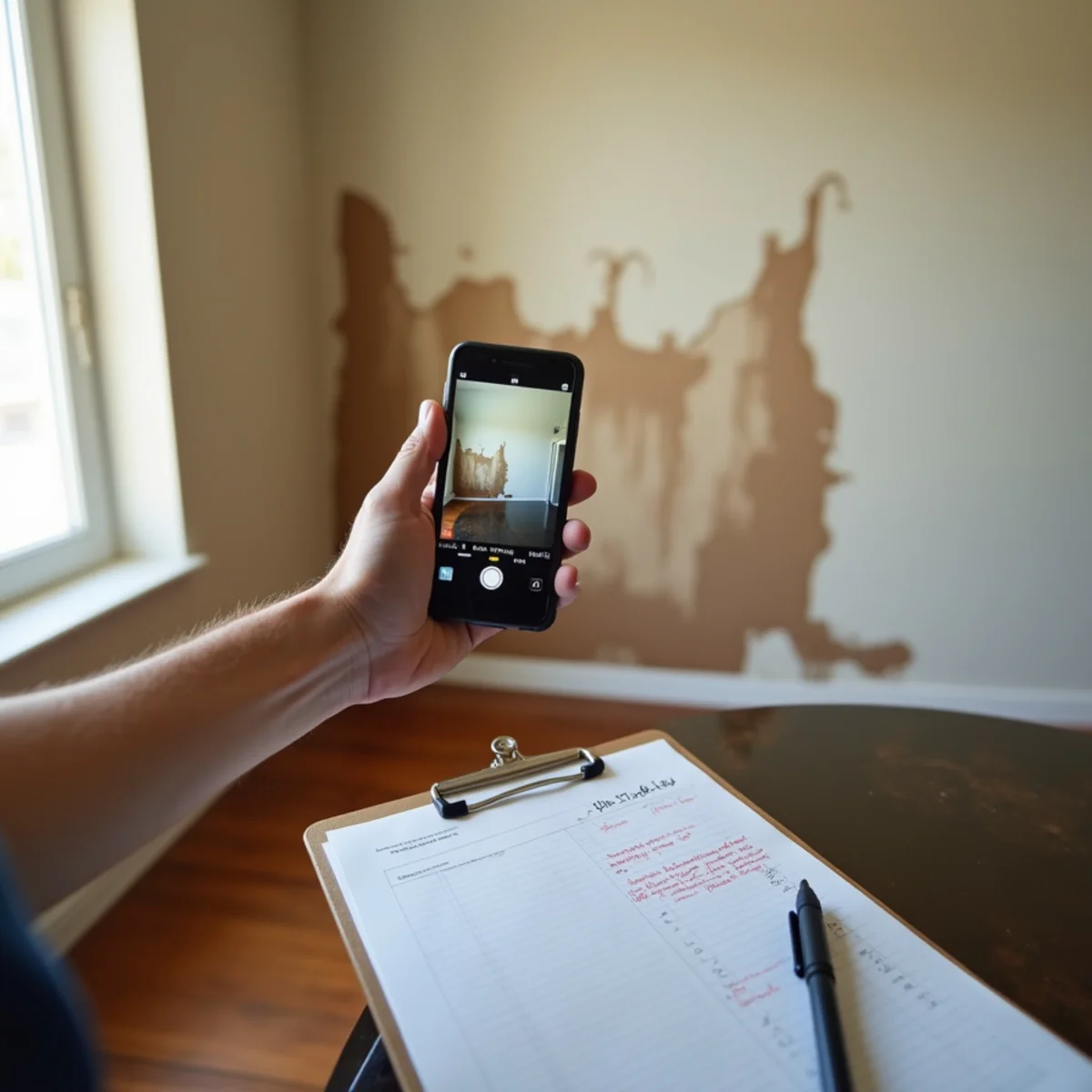
Two practical habits help. First, check under sinks, around the water heater, and along baseboards every so often, and act the moment you spot a small issue instead of waiting. Second, if something does fail suddenly, document the scene before you clean up, because proving the loss was abrupt is often what makes or breaks the claim.
Why this one distinction decides your whole claim
The water-versus-flood question is not a technicality. It determines which policy you file under, which adjuster handles it, which deadlines apply, and ultimately whether you are paid at all. File a rising-creek loss under a homeowners policy and it gets denied as an excluded flood. Miss the fact that a sudden pipe burst qualifies and you might never open the claim you were entitled to.
It also shapes the cleanup. Insurers often want the source identified and the category of water documented early. Flood water and sewage are treated as contaminated and require more aggressive removal and sanitizing, while a clean burst-pipe loss may be handled differently. Getting the classification right up front keeps the restoration and the paperwork aligned.
Costs vary widely depending on how much water, how long it sat, and whether contaminated water is involved, so be cautious with any flat price you hear early on. For a fuller breakdown of what carriers do and do not pay for, see what homeowners insurance covers.
What to do either way
No matter which category you are in, the first moves are similar. Stop the source if you safely can, shut off the water at the main for an internal failure, and stay out of standing water that may be near electrical outlets or carrying contaminants.
Then build your record. Take wide and close-up photos and video before you move anything, note the date and time you discovered the damage, and keep damaged items until an adjuster has seen them. Thorough documentation is often the difference between a smooth payout and a drawn-out dispute, and our guide on how to document a water damage claim walks through it step by step.
Call your insurer or agent to confirm what your specific policy covers and whether you carry flood coverage, because the generalities here can differ from the exact terms you signed. If you need help translating adjuster language or pushing a stalled file forward, our insurance claims help can work alongside your carrier. We serve Buena Park and surrounding communities including Cerritos in southeast LA County.
When water is actively spreading, speed matters more than certainty about the category. Water Damage Buena Park runs a 24/7 emergency line with a roughly 60-minute response target, and we are locally owned, licensed and insured, and IICRC-certified. Call (201) 277-9344 and we will start extraction and drying while you sort out the insurance side.
Frequently Asked Questions
Generally no. A standard California homeowners policy excludes flood damage from rising external water. To be covered against floods you usually need a separate policy through the NFIP or a private flood insurer. Always confirm your exact coverage with your own agent.
If the water came from inside your plumbing failing suddenly, it is water damage and typically covered by homeowners insurance, even if it happened during a storm. The rain outside does not change that. What matters is that the water escaped from an internal system, not that it rose from the ground.
The two most common reasons are that the loss was a flood and not covered by the homeowners policy, or that the damage was gradual rather than sudden. Slow, long-term leaks are often treated as maintenance issues. Strong documentation showing the loss was abrupt helps avoid a denial.
It depends on your property's location relative to flood corridors like Coyote Creek and your lender's requirements. Some homes are in mapped flood zones and some are not. Because standard homeowners coverage excludes floods entirely, it is worth asking your agent whether an NFIP or private flood policy makes sense for your address.
Right away. Water keeps spreading into drywall, subfloor, and framing within hours, and mold can begin within a day or two. Stopping the source and starting professional extraction quickly limits the damage and the cost. You can document the scene and call your insurer at the same time.
Dealing with water damage right now?
Water Damage Buena Park responds 24/7 across Buena Park & North OC.