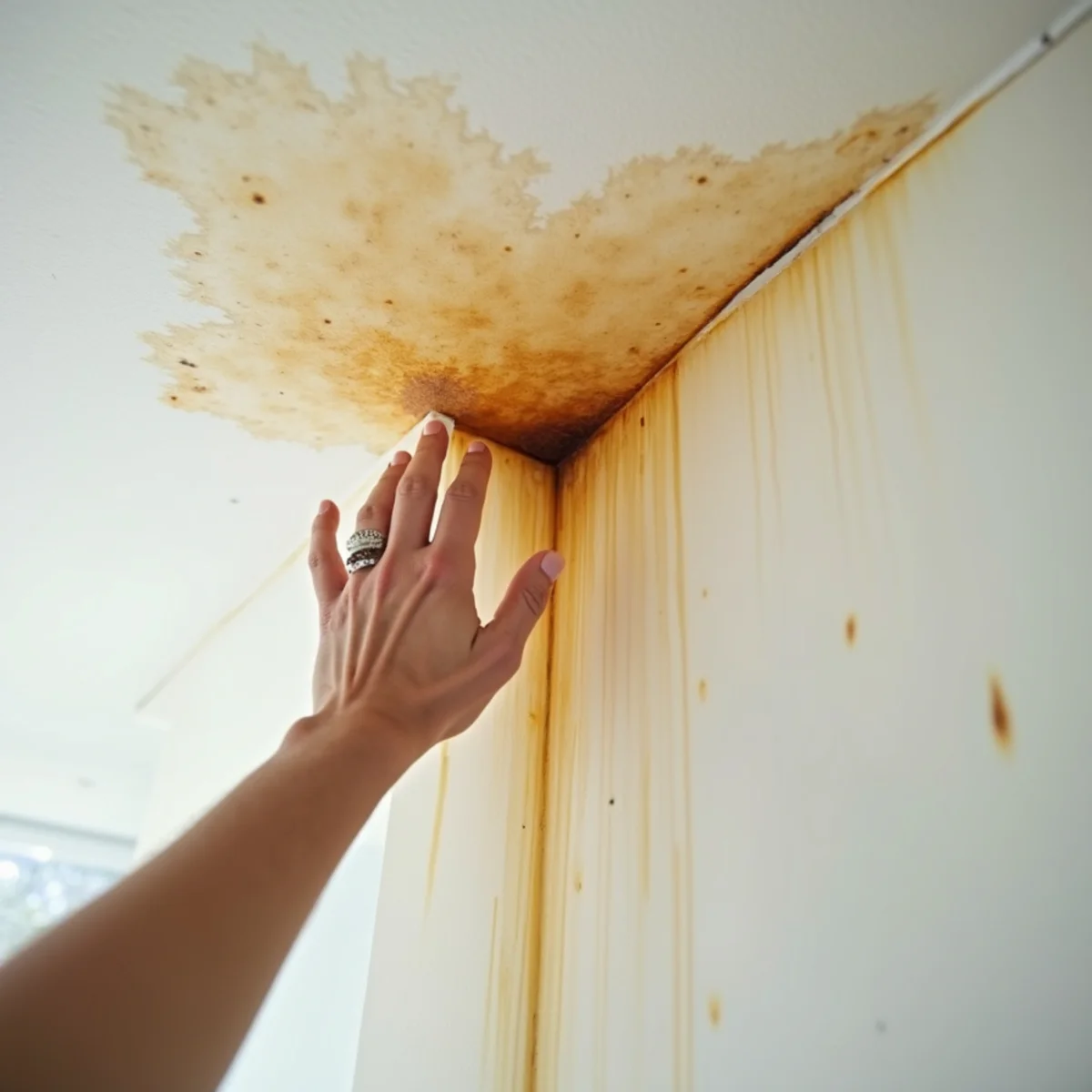
You walk into the hallway and there it is: a coffee-colored ring bleeding across the drywall over your head. A water stain on the ceiling is never just a cosmetic blemish. The drywall is acting as a witness. Something above it got wet, and the water had to come from somewhere.
In Buena Park, that somewhere depends a lot on the house. Single-story slab tract homes often hide their supply and drain lines in the attic, so a pinhole leak drips down onto the ceiling instead of pooling on a floor. Older neighborhoods carry aging galvanized and cast-iron plumbing that gives out at the joints. And in the city's many duplexes, condos, and apartments, the leak that stains your ceiling frequently starts in the unit upstairs.
This guide walks through what causes a ceiling stain, how to tell an old dry ring from an active leak, the one sign that means you should get people out of the room, and why painting over the spot almost always backfires.
Where ceiling water stains come from
A brown stain on the ceiling is the end of a trail, not the start of it. Water finds the path of least resistance along framing, then drops through the drywall at whatever point it reaches. In most Buena Park homes the source falls into one of four buckets.
- Roof leaks. The local rainy stretch runs roughly November through March, and that is when aging asphalt shingles, cracked flashing around a vent or chimney, or a clogged roof valley let water track along the rafters before it lands on your ceiling.
- Plumbing above the room. A supply line in the attic, a drain line, or a failed wax ring under an upstairs toilet can soak the framing and subfloor, then bleed through to the ceiling below.
- HVAC and condensation lines. An attic air handler with a plugged condensate drain, or a sweating duct in a hot attic, drips steadily onto the drywall, often with no rain anywhere in the forecast.
- An upstairs unit. In multi-family buildings, a tub overflow, an overflowing washer, or a burst hose in the unit above you shows up as a growing stain on your own ceiling.
Because the cause and the stain can sit several feet apart, the spot you see rarely marks the actual break. That matters for how you go looking for it.
Is it an old stain or an active leak?
Not every ring means water is still moving. A stain from a leak that was fixed years ago can linger forever. Before you worry, figure out whether the problem is live.
- Touch it, carefully. A stain that feels cool, damp, or soft under light finger pressure usually means water is still present. A dry, crisp ring that does not give is more likely from a past event.
- Mark the edges. Trace the border of the stain with a pencil and check it again in a day. If the stain has pushed past your line, the leak is active.
- Watch it after rain. A ring that darkens, spreads, or reappears during the next storm points to the roof or flashing rather than plumbing.
- Get a moisture reading. A technician's moisture meter sees what your hand cannot, telling you whether the drywall and the framing behind it are still holding water.
A slow, intermittent leak is the trickiest kind because it can dry between episodes and look harmless. If you suspect water is hiding in a wall or ceiling cavity without an obvious source, the signs of a hidden water leak are worth reviewing before the damage spreads.
The danger sign: a sagging or bulging ceiling
A flat, dry-looking ring is one thing. A ceiling that sags, bulges, or bubbles downward is another, and it changes the whole situation. That bulge is a pocket of water sitting on top of the drywall, and saturated drywall loses its strength fast. A loaded section can let go all at once, dropping both the ceiling material and several gallons of water into the room below.
If you see sagging, treat it as an emergency.
- Keep people and pets out of the room and move furniture and electronics out from underneath the bulge.
- Do not poke at the bulge while standing directly under it. If you need to relieve the pressure, work from the side with a bucket positioned below, and pierce one small hole near the lowest point so the water drains in a controlled stream instead of all at once.
- Shut off the water if you can reach the source, whether that is the supply valve for the fixture above or the main shutoff for the home.
- Call for help rather than trying to rebuild the ceiling yourself. A bulging ceiling needs the water stopped, the cavity opened and dried, and the structure checked.
Why painting over a stain backfires
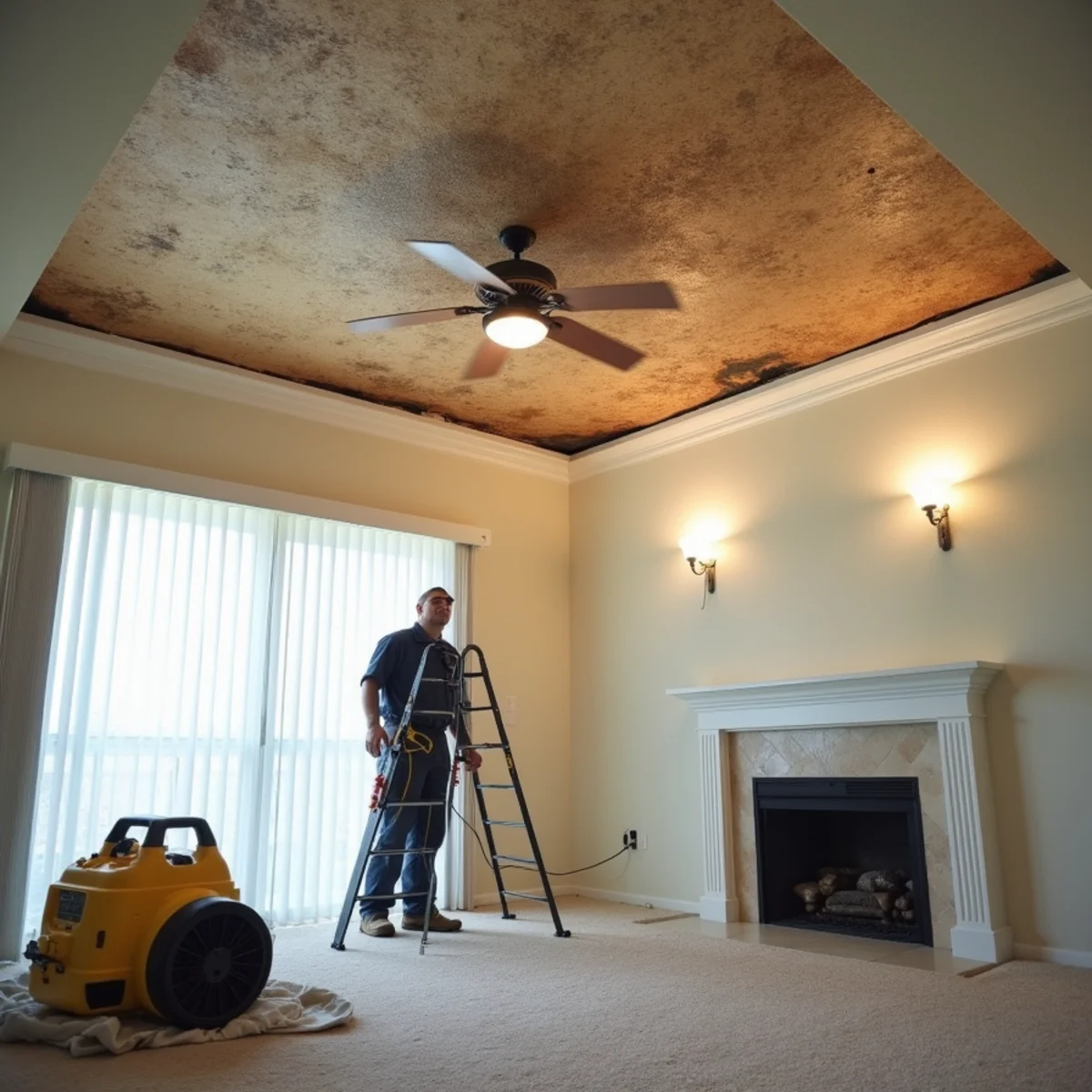
It is tempting to roll a stain-blocking primer over the mark and move on. The problem is that paint hides the symptom while the source keeps running. Moisture trapped in the ceiling cavity feeds mold, which can take hold on wet drywall and framing within a day or two. You end up repainting the same spot, then eventually tearing out far more material than if you had traced the leak the first time.
There is a Buena Park-specific caution here too. Many homes built before the mid-1980s have textured 'popcorn' ceilings that may contain asbestos. Do not scrape, sand, or cut into that texture yourself, because disturbing it can release fibers into the air. Leave suspect material to qualified pros who can test and handle it safely.
The honest fix is to find the source, dry the structure, address any mold, and then repair the drywall. Done in that order, the stain does not come back.
Finding the real source
Guessing where a ceiling leak starts leads to unnecessary holes in good drywall. Because water migrates along framing, the break can be feet away from the stain, uphill along a slope, or on the far side of the attic. Locating it without destruction is a skill of its own.
That is the job of professional leak detection, which combines moisture mapping, acoustic tools, and thermal imaging to pinpoint where water is entering and how far it has spread. When the trail leads up to the roofline, our roof leak water damage work covers the source and the damage it left behind.
Once the leak is stopped, the cavity has to be dried properly before anything is closed back up, and the finished ceiling restored. Our ceiling water damage repair service handles that end to end, from drying and mold treatment through drywall, texture, and paint.
We cover this across Buena Park and the surrounding communities, including neighboring Fullerton and the rest of North Orange County and southeast LA County.
When to call a professional
A minor, confirmed-dry stain from an old repair can wait for a painter. Most other cases should not. Call when any of these are true.
- The stain is damp, soft, or growing when you re-check it.
- The ceiling is sagging, bulging, or bubbling.
- The stain returns or worsens every time it rains.
- You notice a musty smell, visible mold, or peeling paint around the area.
- You live in a multi-family building and the water appears to be coming from the unit above you.
The faster the source is found and the structure dried, the less of your ceiling has to come out. As IICRC-certified technicians trained in water restoration and structural drying under the S500 standard, we are set up to respond quickly, document the loss, and bill your insurance directly.
Frequently Asked Questions
A dry stain from an old, fixed leak is mostly a cosmetic issue. An active one is a different story. Ongoing moisture feeds mold and weakens drywall, and a ceiling that sags or bulges can collapse under the weight of pooled water. If the ceiling is bulging, keep people out of the room and get it addressed right away.
Press the stain lightly. Cool, damp, or soft drywall usually means water is still present. Trace the edge with a pencil and look again the next day, and watch whether the stain reappears or grows after rain. A moisture meter reading from a technician confirms whether the material behind the surface is still wet.
Only after the leak is found, stopped, and the area is dry. Painting or priming over an active stain hides the symptom while the source keeps leaking and mold grows in the cavity. If your ceiling has older popcorn texture, do not scrape or sand it yourself, because it may contain asbestos.
Notify the neighbor and your building manager or HOA so the source can be shut off, and document the damage with photos and the date. Then have the ceiling assessed and dried. We work with multi-family properties across Buena Park and can coordinate the inspection and insurance paperwork.
Dealing with water damage right now?
Water Damage Buena Park responds 24/7 across Buena Park & North OC.