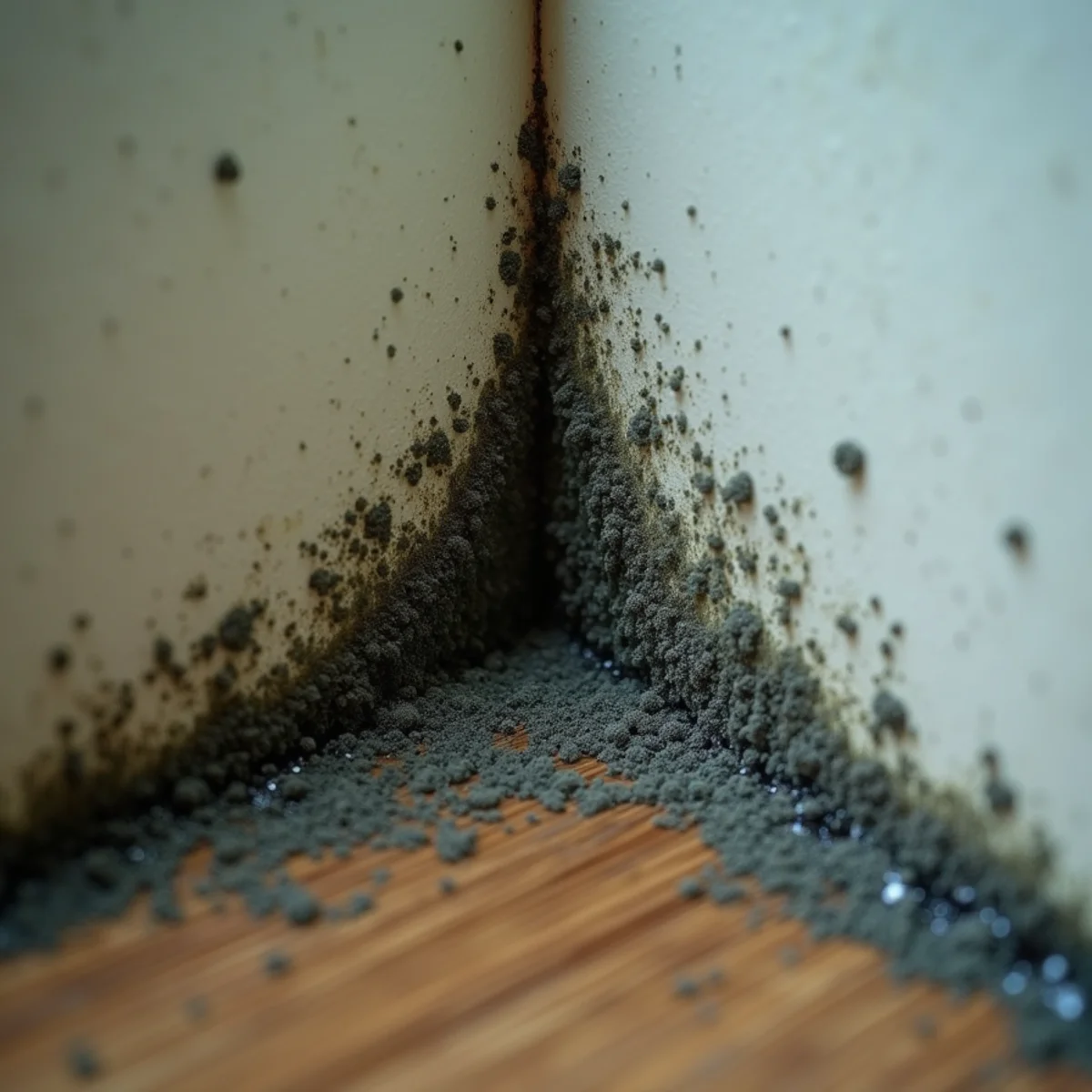
A pipe lets go under the sink, the water heater fails, or a slab leak wicks up into the living room carpet. The water is only half the problem. The bigger threat in a Buena Park home is what starts growing in the dark, damp materials a day or two later.
Mold can take hold within 24 to 48 hours of a water event, so preventing it is really a race against the clock. The faster and more thoroughly you dry everything out, the less chance spores have to settle in. This is the prevention playbook: what to do in the first hours, what to pull out, how to dry it for real, and where a wet/dry vacuum stops being enough.
Why the First 24 to 48 Hours Decide Everything
Mold spores are already in the air of every home. They do not need an invitation, only moisture, a food source, and time. Soaked drywall, carpet pad, wood framing, and cardboard give them all three.
Under the right conditions, visible growth can begin in roughly 24 to 48 hours. Buena Park works against you here. Many homes sit on concrete slabs that hold moisture and release it slowly, and from November through March the coastal air stays humid enough to keep porous materials damp long after the obvious puddle is gone.
That is why prevention is not a separate task from cleanup. It is the same task done quickly and completely. For the detail on how that timeline plays out, see how fast mold grows.
What You Can Safely Do in the First Hours
Before anyone with equipment arrives, a homeowner can make real progress and protect the house from further damage. Safety comes first: if water is anywhere near outlets, the panel, or a gas appliance, shut off power to that area or wait for a professional.
- Stop the source if you can reach it, such as the shutoff valve under a sink or the main at the street.
- Move furniture, rugs, and boxes up off the wet floor so they stop soaking and stop staining the carpet.
- Blot or push out as much surface water as possible with towels, a mop, or a wet/dry vacuum.
- Open interior doors and closet doors so air can reach trapped, humid pockets.
- Photograph everything before you move or remove it, for your insurance claim.
What you should not do is assume a little surface drying is the end of it. The water you can see is usually a fraction of what has already wicked into walls and under flooring.
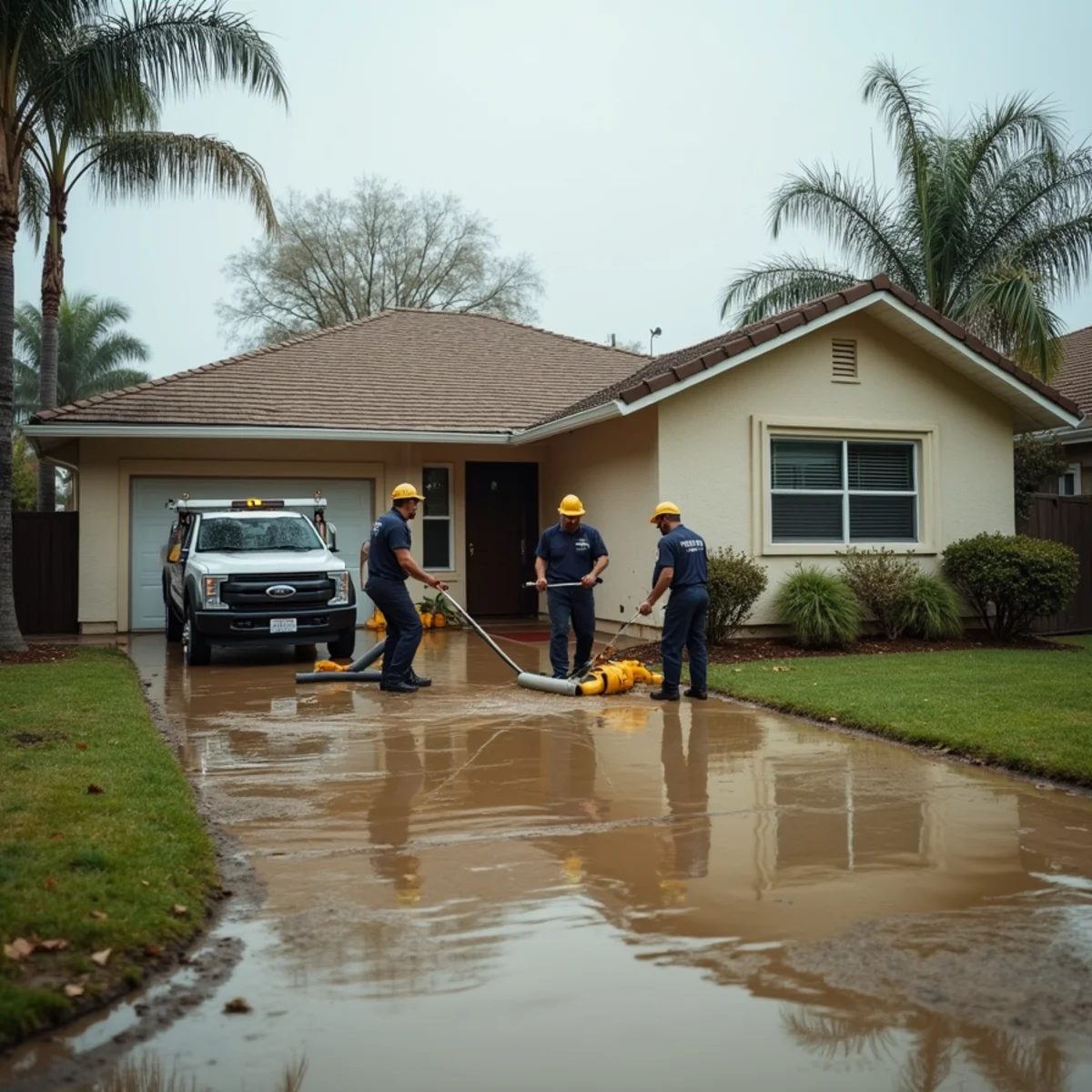
Get the Standing Water Out Immediately
Every hour that water sits, it spreads. It travels along the bottom plate of a wall, under baseboards, and into the next room through the gap where drywall meets the slab. A mop handles a cupful; it does not handle gallons sitting in carpet pad.
Professional water extraction uses truck-mounted or portable units that pull far more water out of carpet, pad, and subfloor than any household vacuum can. Removing the bulk of the water fast is the single biggest lever you have on whether mold ever gets started.
The goal at this stage is simple: get liquid water out of everywhere it has traveled, not just where it pooled.
Pull Out What Cannot Be Dried in Time
Some materials dry and recover well. Others hold water like a sponge and will grow mold before they ever dry out, no matter how many fans you point at them. Trying to save those is how a small loss turns into a mold problem.
- Carpet pad is the usual casualty; it soaks through fast and is cheap to replace.
- Drywall that stayed saturated, especially the lower section of a wall, often has to come out so the cavity behind it can dry.
- Wet fiberglass or cellulose insulation loses its value and traps moisture, so it generally gets removed.
- Pressed-wood furniture, soaked cardboard, and old ceiling tiles rarely come back.
Solid wood, tile, and structural framing are usually worth drying in place. The judgment call is how saturated a material is and how long it has been wet, which is where moisture readings beat guesswork.
Dry It for Real: Air Movers, Dehumidifiers, and Meters
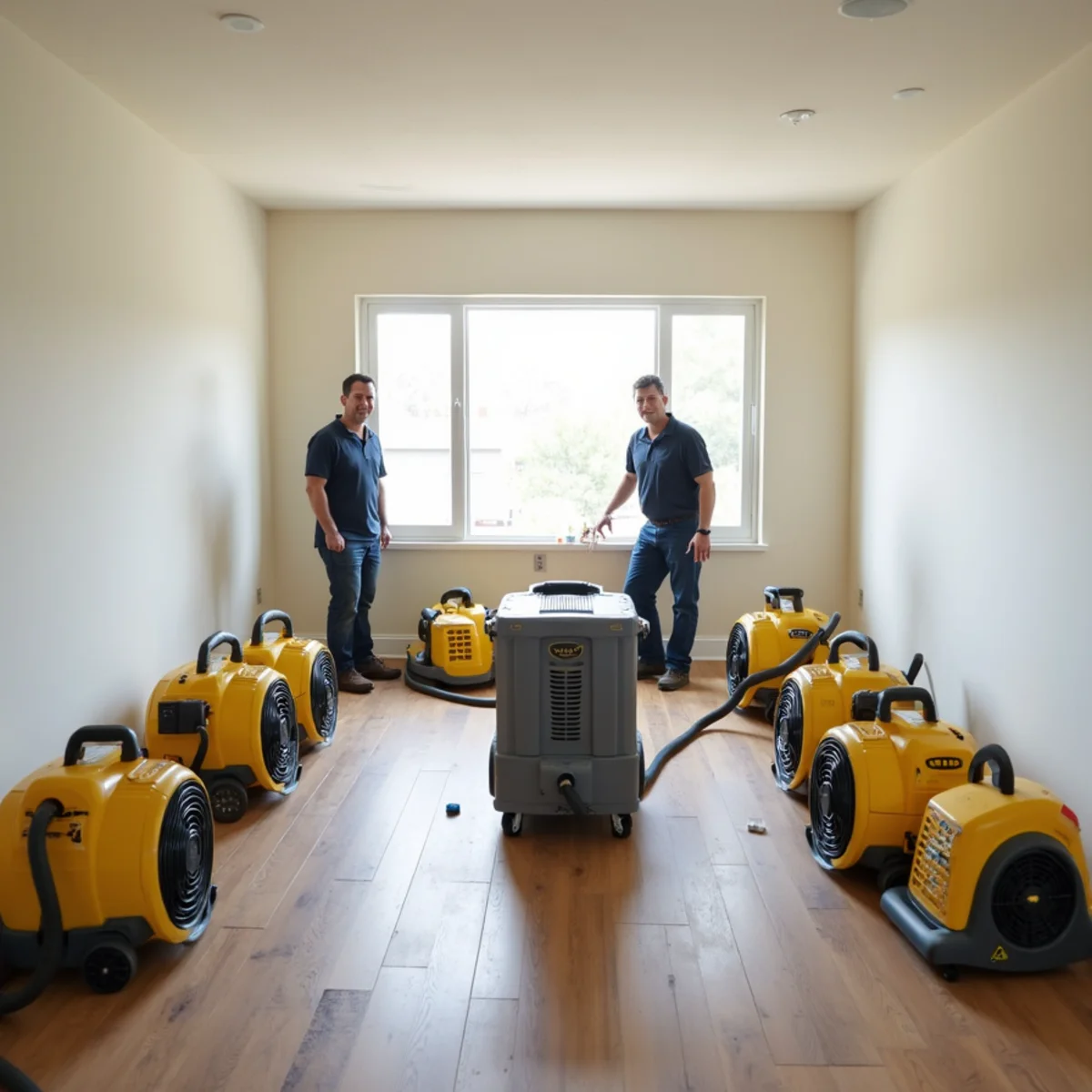
Household box fans move room air around but do little to pull moisture out of materials. Real drying needs airflow directed across wet surfaces plus dehumidification to capture the water that evaporates, so it does not simply resettle elsewhere in the house.
- Air movers push high-velocity air along floors and walls to speed evaporation from the materials themselves.
- Dehumidifiers remove that evaporated moisture from the air so the room keeps drying instead of reaching equilibrium.
- The equipment has to run continuously, often for several days, not a few hours overnight.
This is the core of professional structural drying: the right number of machines in the right spots, left running until the structure is dry. For a sense of how many days to expect, read how long restoration takes.
Dryness is verified with moisture meters, not by touching the wall. A surface can feel dry while the framing behind it still reads wet. Meter readings taken against a dry baseline elsewhere in the home tell you when it is genuinely done.
Control Humidity and Don't Trap Moisture
While things dry, the surrounding air matters. Keeping indoor humidity low pulls moisture out of materials faster and makes the space less hospitable to mold. Running a dehumidifier and your AC, and keeping windows closed on a humid winter day, all help.
Just as important is what not to do. A few moves trap moisture and practically guarantee mold:
- Do not paint or seal over damp drywall or trim; you lock the water in behind it.
- Do not close a wet wall cavity back up before it is verified dry.
- Do not lay area rugs or install new flooring over a subfloor that still reads wet.
- Do not shut off the drying equipment early just because the surface feels fine.
Fix the Source and Know When DIY Stops
Drying does nothing if the water keeps coming. A leaking toilet supply line, a roof gap, or a slab leak will re-wet everything you just dried. The moisture source has to be found and stopped as part of prevention, not after.
Homeowners can handle first-response steps and small, clean spills caught immediately. The limits show up with water inside walls, under cabinets, beneath flooring, and especially in a slab, where you cannot see or reach the moisture and cannot confirm it is gone.
That is where professional drying earns its keep, and where mold prevention most often succeeds or fails. If growth has already appeared, the job shifts from prevention into mold removal, which is a different process. We respond across Buena Park and nearby communities like Anaheim, usually on-site in about 60 minutes.
Caught a leak and want to stop mold before it starts? Water Damage Buena Park is available 24/7 and arrives fast with the extraction and drying equipment that makes prevention actually work. Call (201) 277-9344 now.
Frequently Asked Questions
Aim to begin extraction and drying within the first 24 hours. Mold can start within 24 to 48 hours of materials getting wet, so the sooner the water is out and air movers are running, the lower the risk. In Buena Park's humid winter months, that window can feel even shorter.
Fans help move air but do not remove moisture from the room, and opening windows on a humid day can add moisture rather than remove it. Effective drying pairs directed airflow with dehumidification and runs continuously until moisture meters confirm the structure is dry.
Often yes for carpet pad, which soaks through and is inexpensive to replace. Saturated drywall and wet insulation frequently come out too so the wall cavity can dry. Solid wood, tile, and framing are usually dried in place rather than removed.
By measurement, not by feel. Moisture meters compare the wet areas to a dry baseline elsewhere in the home. A wall can feel dry on the surface while the framing behind it is still wet, which is exactly the condition that feeds mold.
Then you are past prevention and into remediation. Stop disturbing the area, keep it contained, and call for an assessment. Catching it early still limits how far it spreads and how much has to be removed.
Dealing with water damage right now?
Water Damage Buena Park responds 24/7 across Buena Park & North OC.