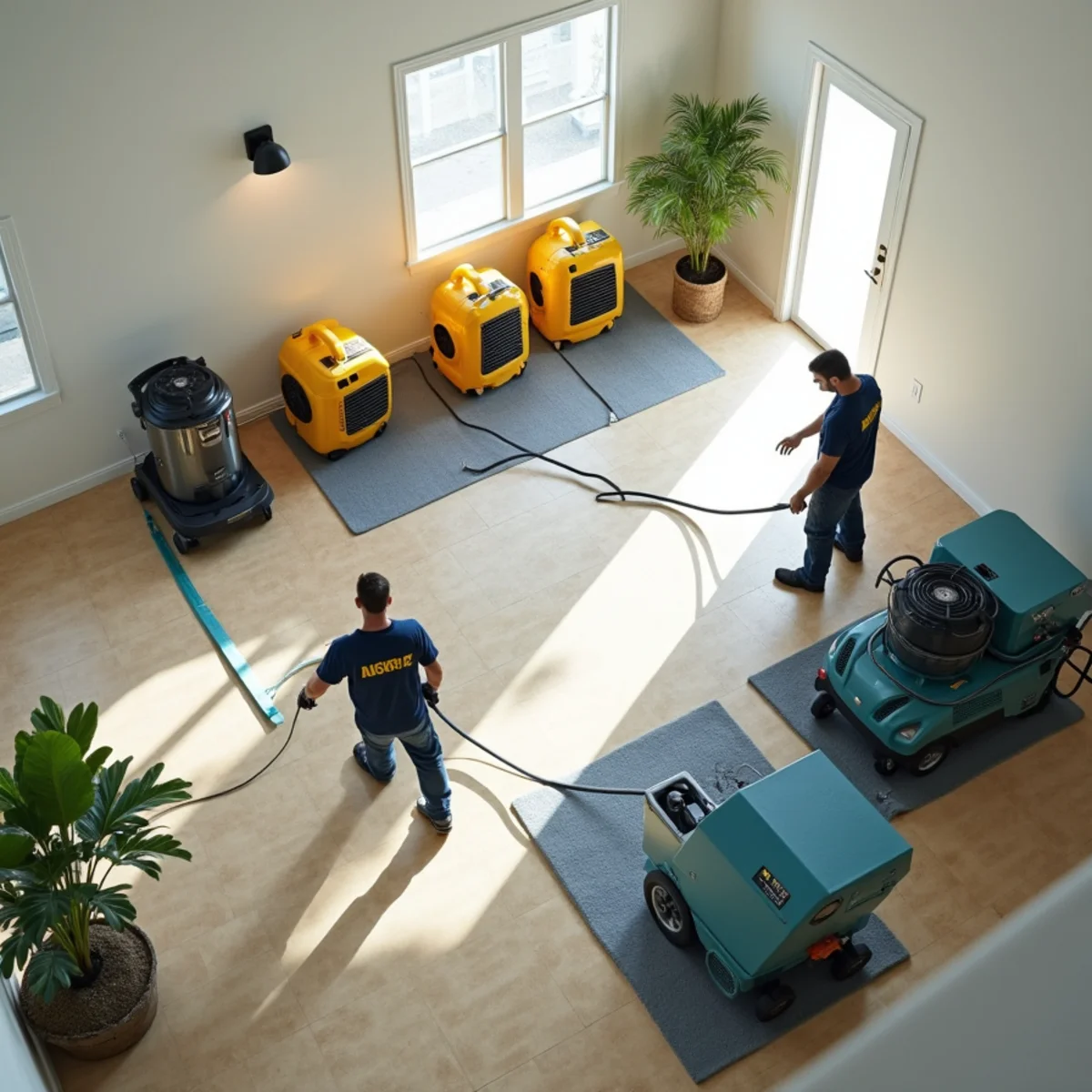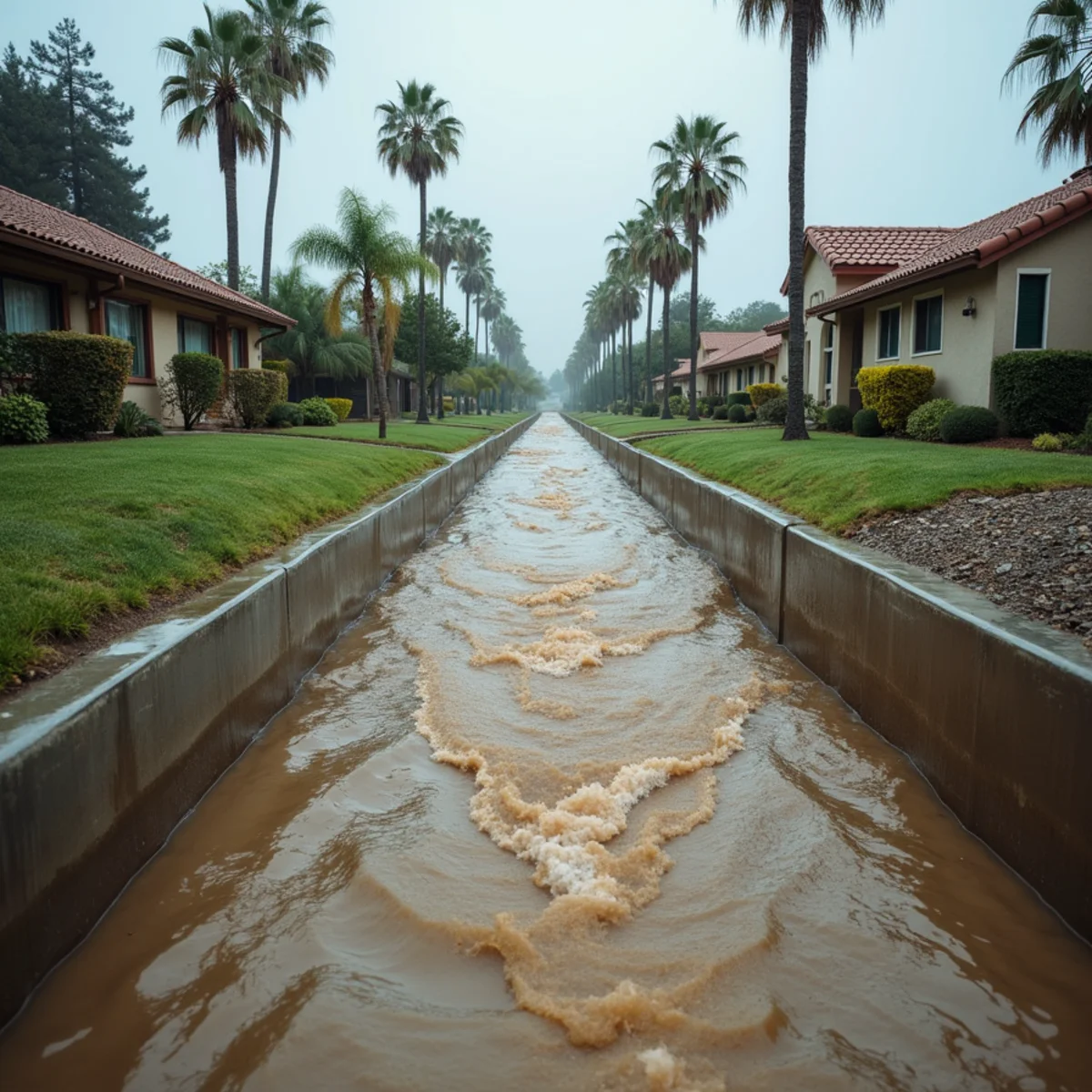
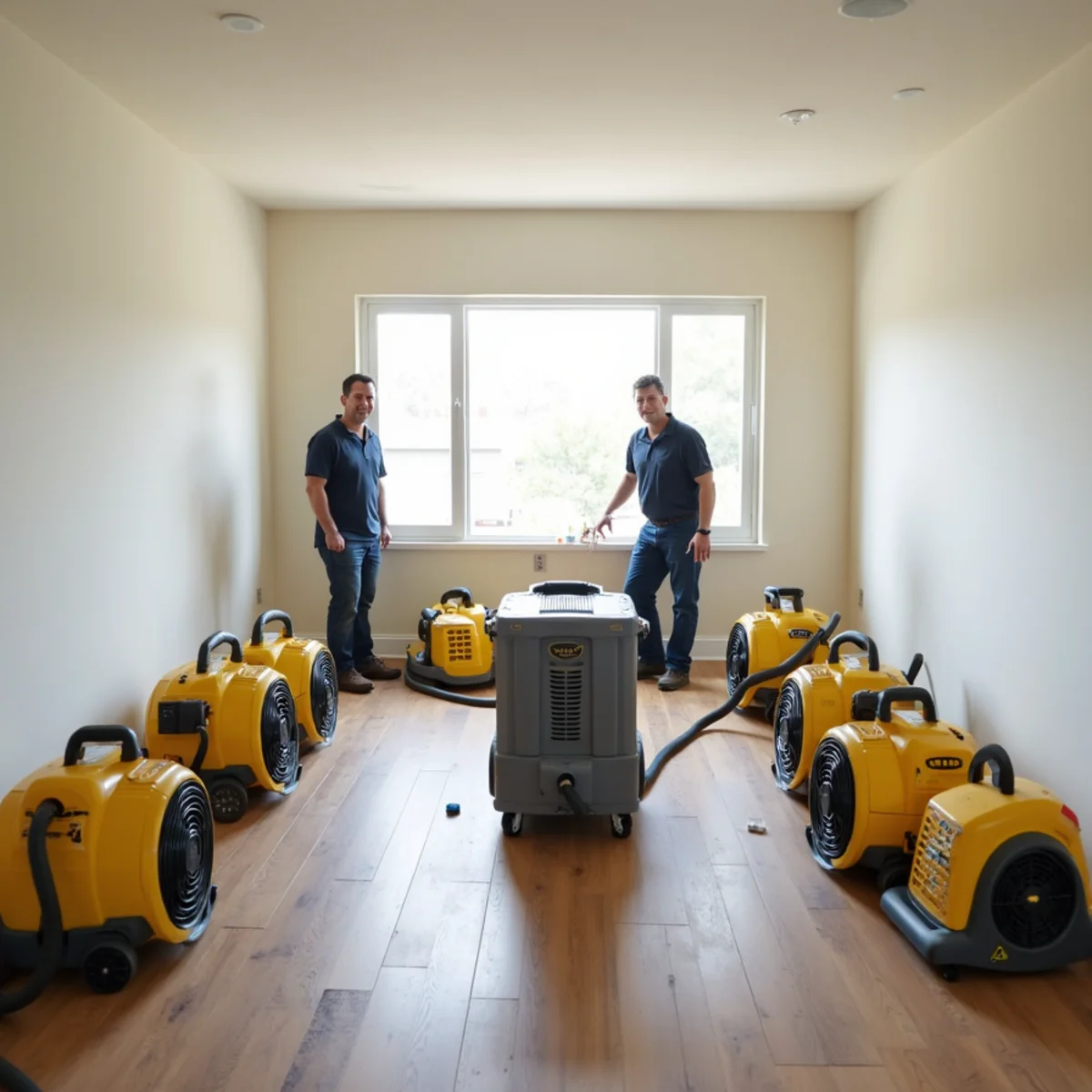
Getting the standing water out is only the start. The water you can see is a fraction of the water in your home — the rest has soaked into drywall, framing, subfloor, and the air itself. Structural drying is the science of pulling that hidden moisture out before it warps materials and grows mold. Call our 24/7 line and we will set up a proper drying plan, not just a few fans.
Wet materials do not dry evenly or on their own. Water moves from wet to dry and from materials into the air, and unless that airborne moisture is captured and removed, it simply resettles somewhere else in the house. That is the difference between drying a home and just moving the problem around.
We control three things: airflow, humidity, and temperature. Air movers pull moisture off surfaces, dehumidifiers pull it out of the air, and we monitor the whole environment daily until every material reads dry. This is measured work, guided by the S500 standard, not a guess.
We are IICRC-certified in water restoration and applied structural drying, licensed and insured, and locally owned. We record the readings throughout for your insurance claim.
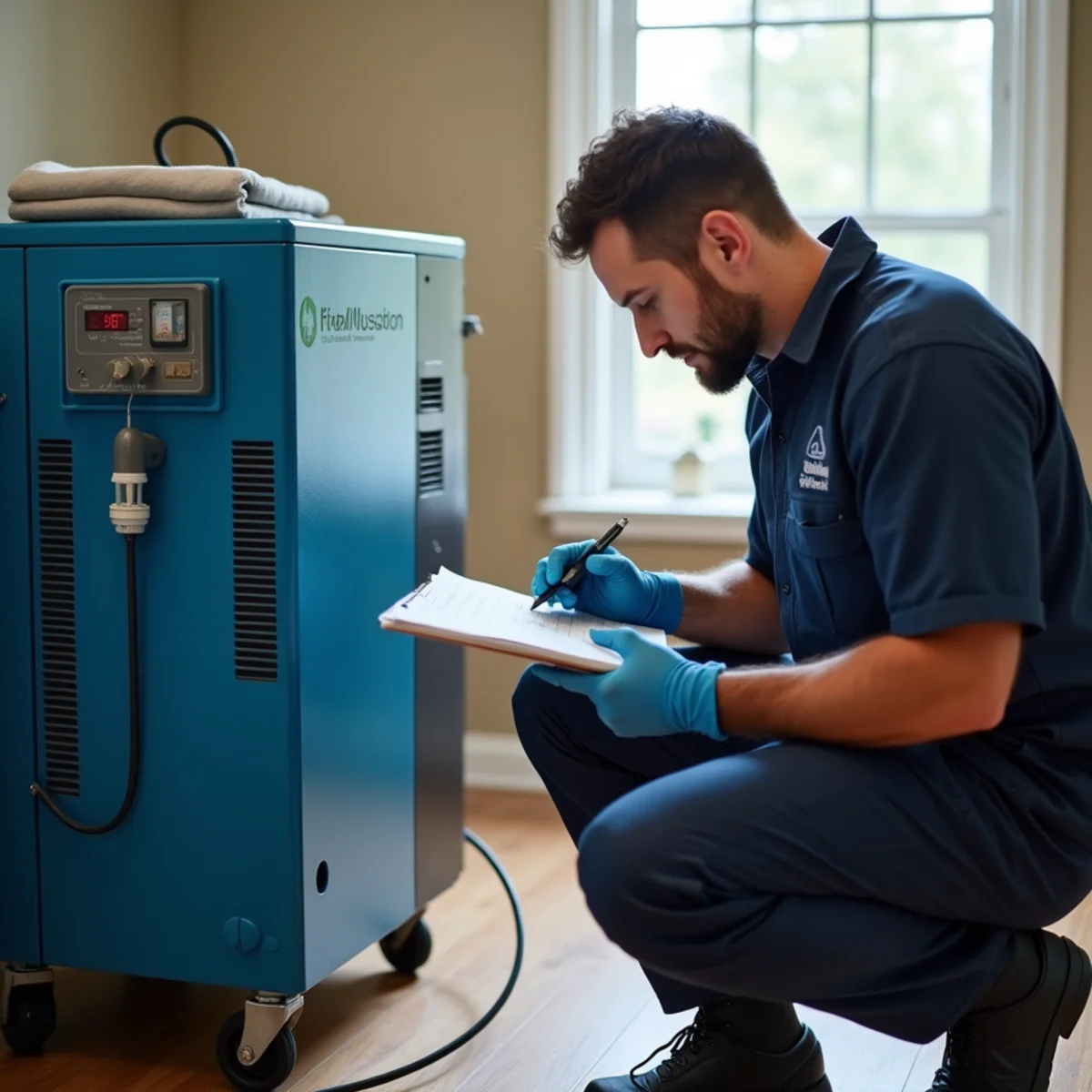
Signs You Need Structural Drying & Dehumidification in Buena Park
Water damage rarely announces itself politely. Here's what tends to signal that it's time to call a professional:
- Standing water is gone but surfaces still feel damp or cool
- A persistent musty smell after the visible water is cleaned up
- Condensation on windows or a heavy, humid feel indoors
- Baseboards, trim, or drywall that stay dark or soft
- Warping, cupping, or swelling that appears days after the loss
- Mold spotting emerging on walls or in corners
What's Included in Our Structural Drying & Dehumidification
Structural Drying & Dehumidification with us is a complete, done-for-you service — not a partial fix that leaves you chasing other contractors. Here's what a typical job includes:
- Full moisture map of affected framing, subfloor, and walls
- Drying plan built to the IICRC S500 standard
- Correct number of air movers and dehumidifiers calculated for the space
- Daily moisture readings logged until dry standard is reached
- Thermal imaging to find hidden moisture pockets behind walls
- Psychrometric readings for temperature, humidity, and grain tracked each visit
- Signed drying certificate confirming the structure is dry
Why This Matters in Buena Park & North OC
Buena Park's slab-foundation homes shape how we dry. Concrete holds moisture and gives it back slowly, so a slab that got wet keeps feeding humidity into the room long after the surface looks dry. We meter the slab directly and keep dehumidifiers running until it, not just the wall above it, reads dry.
Our coastal-influenced climate matters too. On humid days, opening windows to dry a home can actually pull damp outside air in and slow the job. That is why we dry as a closed, controlled system with dehumidifiers rather than relying on the weather. It is the reliable way to reach a dry standard in North Orange County conditions.
In the area's apartments and condos, a single loss can involve several connected assemblies — shared walls, ceilings, and floors between units. Proper structural drying maps moisture across all of them so we do not dry one unit while leaving wet framing feeding a neighbor's ceiling. Thorough monitoring keeps the whole structure sound.
Our Structural Drying & Dehumidification Process
Our structural drying process is measured, monitored, and finished only when the readings say so.
- 1
Emergency Contact & Rapid Assessment
A real person answers your call 24/7 — never a voicemail. We ask a few quick questions to gauge severity, then dispatch a crew immediately. While you wait, we'll walk you through shutting off the water and safely documenting the damage for your insurer.
- 2
Water Extraction
Our technicians arrive with truck-mounted and portable extraction units to pull out standing water fast — the single biggest factor in limiting damage. We move furniture and belongings to dry areas and stop the spread before it reaches new rooms.
- 3
Drying & Dehumidification
We position industrial air movers and dehumidifiers to dry structural materials from the inside out, then monitor moisture daily with professional meters and thermal imaging so hidden dampness behind walls and under floors doesn't turn into mold.
- 4
Cleaning & Sanitizing
Every affected surface is cleaned with antimicrobial and anti-fungal treatments. For gray- and black-water losses we follow strict IICRC S500 containment, PPE, and disposal protocols to keep your home safe.
- 5
Restoration & Reconstruction
Once your property is dry, we repair or replace drywall, flooring, cabinetry, and paint — and put it back the way it was. One company handles the whole job, from the first extraction to the final coat of paint, so you're never juggling three contractors.
What Affects the Cost of Structural Drying & Dehumidification
We give you a clear, upfront estimate after a free on-site assessment — no guessing, no fake numbers. The final figure depends on factors like:
- The size of the affected area and the number of wet assemblies
- How saturated the materials are at the start
- The types of material involved and how slowly they release moisture
- How many air movers and dehumidifiers the job requires
- The number of days of monitoring needed to reach dry
- Indoor and outdoor humidity conditions during the job
Because we document everything to insurer standards, most of this is typically handled through your homeowner's claim — and we bill your insurance directly.
Need help right now?
Certified crews on standby, 24/7. We'll be there fast.
Structural Drying & Dehumidification FAQs
Fans move air, but they do not remove moisture from it — and open windows on a humid day pull damp air in. Without dehumidification, the water evaporating from your walls just resettles elsewhere in the home and keeps feeding mold. Proper structural drying pairs airflow with dehumidifiers and monitoring so the moisture actually leaves the building.
Most jobs run three to five days, but the materials decide, not the calendar. Framing, subfloor, and slab release moisture at their own pace, and we keep equipment running and take daily readings until they hit a dry standard. Removing equipment early because it has been a few days is how hidden moisture turns into mold weeks later.
We measure it. We take moisture readings from the affected materials at the start, set a dry goal based on unaffected areas of your home, and track the readings daily. When the wet materials reach that goal, the structure is dry — and we have the documented numbers to prove it, which insurers appreciate.
The core tools are air movers to sweep moisture off surfaces and commercial dehumidifiers to pull it out of the air, sized to the size and wetness of the job. We map and track moisture with moisture meters and thermal imaging, and we adjust the setup each day based on the readings rather than setting it and walking away.
It does add to your power use, since air movers and dehumidifiers run continuously to pull moisture out of the structure. That is the tradeoff for saving your walls and floors instead of tearing them out. We size the equipment to the actual wet area rather than flooding the room with machines, and we remove units as each zone dries so nothing runs longer than it needs to. On a covered claim, the electricity cost is typically part of what your insurer reimburses, and we log the equipment and run time for that reason.