You step into the hall bathroom, or along the edge of the living room, and the floor is wet. Not spilled-glass wet, but spreading, with no overflowing sink and no stain on the ceiling to explain it. On a Buena Park slab home, water that seems to rise out of the floor itself is unsettling, because the usual suspects are nowhere in sight.
Here is the useful part: water on top of a concrete slab almost always traces back to one of three causes, and each leaves its own fingerprints. Most of the homes on these streets were built in the 1950s and 60s, poured on a concrete slab with copper supply lines running underneath. Six or seven decades in, that copper is thin, and the clay-heavy soil around it swells and pushes after every winter storm. Reading the clues early helps you stop the damage faster and tell a crew exactly what they are walking into.
Three ways water reaches the top of a slab
A concrete slab is not a sealed tray. It has cold joints, hairline cracks, and the gaps where plumbing penetrates it. Water finds those paths. The source, though, is almost always one of three things.
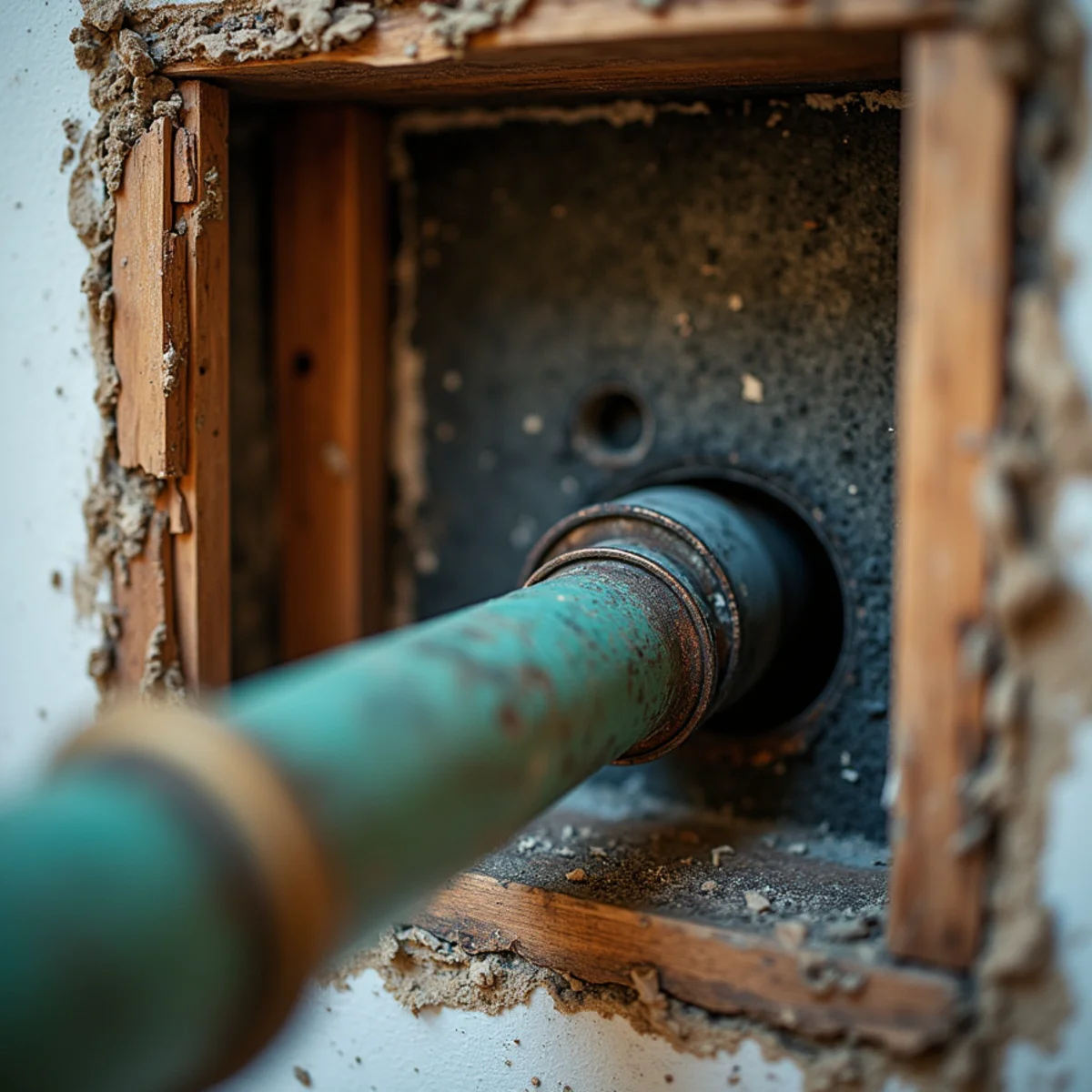
First, a slab leak. A pressurized supply line under the foundation springs a leak, usually on the hot-water side where decades of heat and movement thin the copper to a pinhole. Because the line is under pressure, water does not just pool in the soil. It is pushed, following the path of least resistance until it surfaces through a crack or a joint, often a few feet from the actual break.
Second, hydrostatic pressure and groundwater. From November through March, North Orange County soil soaks up weeks of rain and the local water table climbs. Saturated clay presses up against the underside of the slab, and that pressure drives moisture through the concrete and up through any crack it can find. This is seepage, not a burst pipe, and it tends to show up during or right after a storm.
Third, a failed appliance or a backed-up drain. A water heater on the slab, a washing machine hose, a dishwasher supply line, or a sluggish drain line can all put water on the floor that then tracks along the slab and appears some distance away. This one is usually the easiest to confirm because it starts near the appliance.
How to tell the three apart
The pattern of the water tells you most of what you need to know before anyone opens the floor.
Suspect a slab leak when you notice a warm spot on the tile or laminate underfoot, a sudden jump in the water bill with no change in habits, or the faint sound of running water when every fixture is off. A quick check: shut off every tap and appliance, then look at the water meter. If the dial keeps creeping, water is moving somewhere it should not. These overlap closely with the warning signs of a slab leak, which is worth a read if the symptoms have been building for a while.
Suspect groundwater or hydrostatic pressure when the wetness is widespread rather than pinpointed, tied to a storm, and worst at the low points of the house or along an exterior wall. Homes sitting lower on a block, or closer to flatter ground toward Cerritos and the SE LA County line, tend to feel this first. The water is usually cool, clean, and shows up across several rooms at once.
Suspect an appliance or drain problem when the water is concentrated near one fixture. A sewage smell or dark, cloudy water points to a drain backup rather than a clean supply leak, and that changes how the area has to be handled.
The first ten minutes: safe steps that limit damage
What you do before help arrives matters, and a couple of these steps are about your safety, not the floor.
If you think a pressurized line has failed, shut off the water main. On most Buena Park slab homes it is at the front of the house near the meter, or where the main enters on the garage side. Turning it off stops a slab leak from feeding more water under the house.
Kill power to any wet area at the breaker before you walk through standing water, especially near outlets, a garage, or appliances. Water and electricity in the same room is the one hazard worth pausing for.
Lift what you can. Move rugs, cardboard boxes, electronics, and anything with a fabric or wood base off the wet floor, and slip foil or small blocks under furniture legs so they do not wick and stain.
Do not run a household shop vac or upright vacuum over standing water. It is not built for it and you risk a shock. Towels and a mop are fine for the surface; the water trapped in and under the slab needs extraction gear anyway. Finally, take photos and a short video of everything before you tidy up. It helps your claim, and we bill most carriers directly so that documentation goes straight to good use.
Finding the source without tearing up the whole floor
The fear with a slab problem is a jackhammered living room. In practice, a good crew spends its energy pinpointing the exact spot first so the opening is as small as possible.
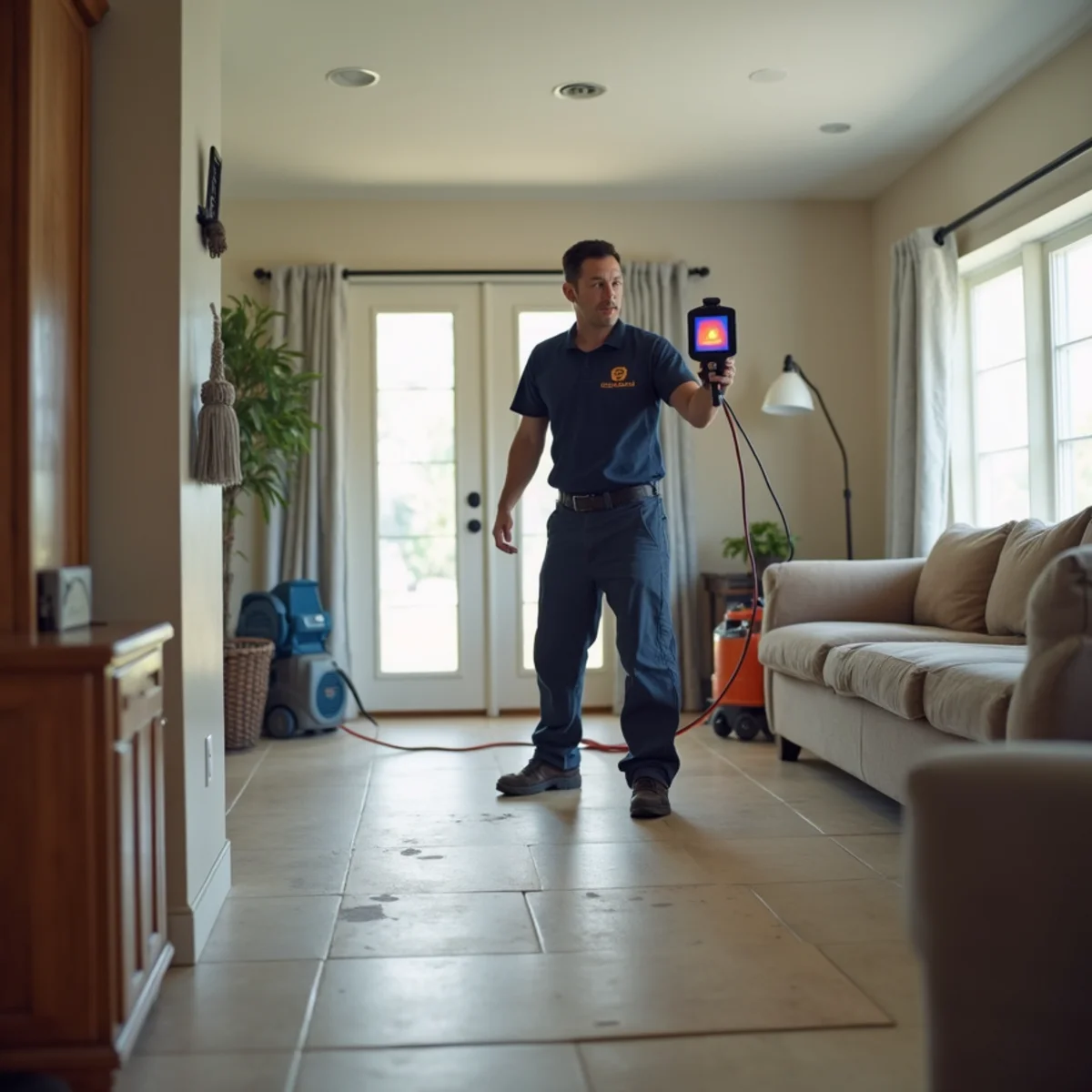
That is the job of professional leak detection. Acoustic sensors listen for the hiss of pressurized water escaping underground. Thermal imaging reads the warm track a hot-water leak leaves across the slab. Line pressure tests isolate which pipe has failed and roughly where. Together these methods turn a whole-floor guess into a one- or two-foot target.
Once the break is located, the repair options open up. A single corroded section can sometimes be spot-repaired. More often, on a 60-year-old copper system, re-routing the failed line overhead or through a wall makes more sense than repeatedly chasing pinholes underground. Either way, the confirmed location drives the plan. For the detection, access, and permanent fix together, see slab leak water damage repair; the same approach applies whether the home is here in Buena Park or over in Anaheim.
Why drying a slab takes longer than you would guess
Surface water is the visible problem. The harder one is that concrete is porous and holds moisture for a long time, releasing it slowly over days. If flooring goes back down before the slab is actually dry, moisture gets trapped underneath, and that is how you end up with mold under tile, cupped wood, and a musty smell weeks after the water is gone.
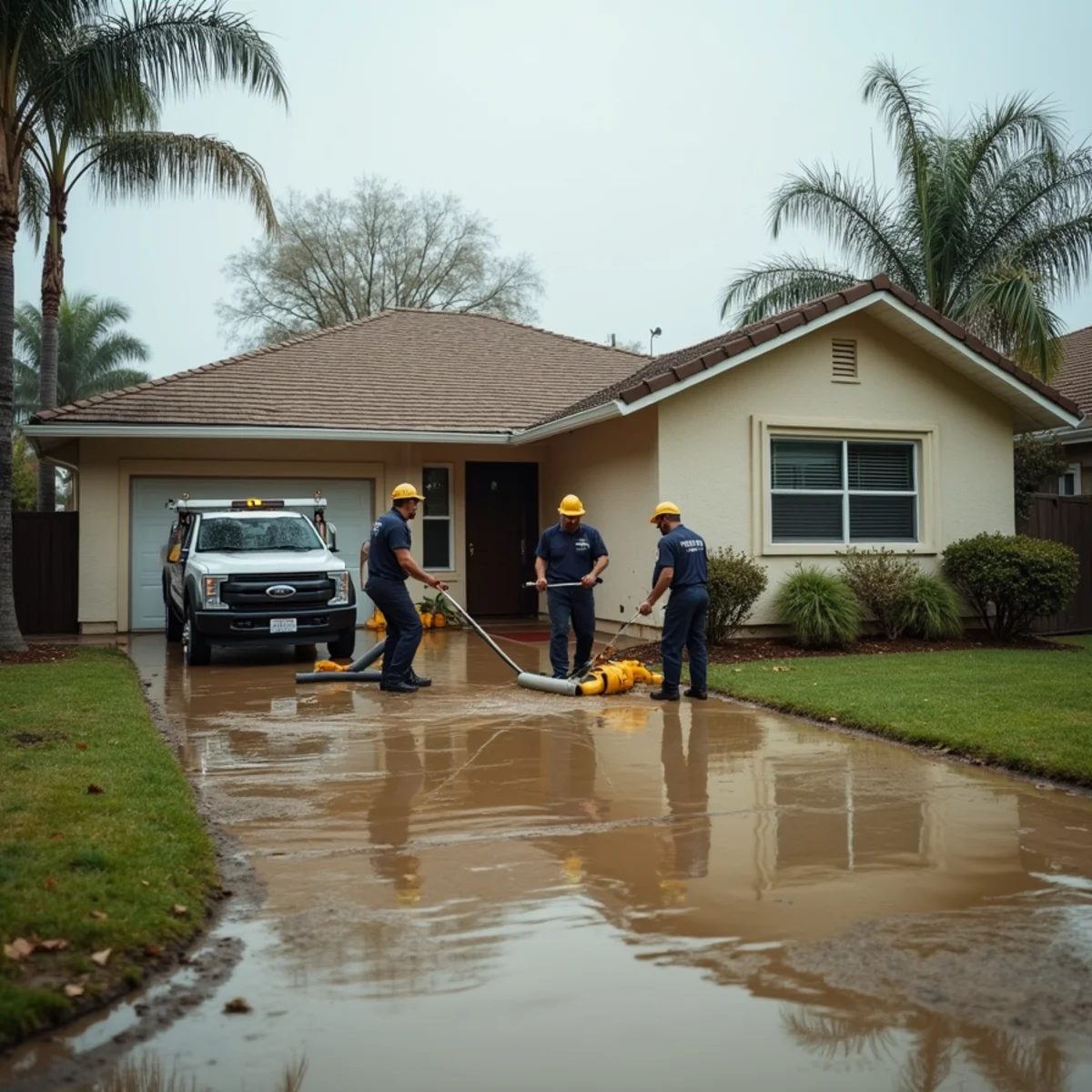
Proper drying means extracting standing water, then setting air movers and dehumidifiers and, where flooring is involved, using specialty systems that pull moisture from under the surface. Crews track progress with moisture meters rather than guessing from how the top feels. Water under a tile floor can read bone-dry on the surface while the slab beneath is still saturated, so the meters, not the eye, decide when drying is finished and flooring can safely go back.
When to call right now
A slow seep you can mop up during a dry spell is worth watching and documenting. But call without waiting if the water keeps coming after you shut the main, if the meter runs with everything off, if you smell sewage, if the water is spreading toward outlets or a bedroom, or if there is any warm spot underfoot. Those point to an active, pressurized source that will only do more damage the longer it runs.
We are a locally owned, licensed and insured restoration company serving Buena Park, North Orange County, and SE LA County, with IICRC-certified technicians (WRT and ASD) working to S500 standards. We run 24/7 with a roughly 60-minute response target, and we bill most insurance carriers directly so you are not fronting the cost. If the situation is urgent, our emergency slab leak help line is the fastest way to reach a crew.
Frequently Asked Questions
No. A slab leak is one common cause, but groundwater pressure after heavy rain and a failed appliance or drain line can both put water on a slab floor too. A warm spot, a running meter, and a higher water bill point to a slab leak; widespread seepage during a storm points to groundwater; water concentrated near one appliance points to a supply or drain failure.
Yes. From November through March the clay soil here saturates and the water table rises, creating hydrostatic pressure against the underside of the slab. That pressure drives moisture through hairline cracks and joints, so clean water appears across low areas of the house during or just after a storm, with no plumbing leak involved.
If you suspect a pressurized supply line has failed, yes, shut off the main near the meter or where it enters the house. It stops a slab leak from feeding more water underneath. If the wetness is clearly tied to a storm and not a pipe, the main may not change anything, but shutting it off while you investigate does no harm.
Usually not. Acoustic listening, thermal imaging, and line pressure tests locate the break to within a foot or two before anything is opened, so access stays small. In older copper systems, re-routing the failed line is sometimes done instead of opening the slab at all.
Longer than most people expect, because concrete holds moisture and releases it slowly. Depending on how much water was absorbed and what flooring is on top, it can take several days with air movers, dehumidifiers, and specialty drying equipment. Crews confirm it is dry with moisture meters before flooring goes back down.
Dealing with water damage right now?
Water Damage Buena Park responds 24/7 across Buena Park & North OC.