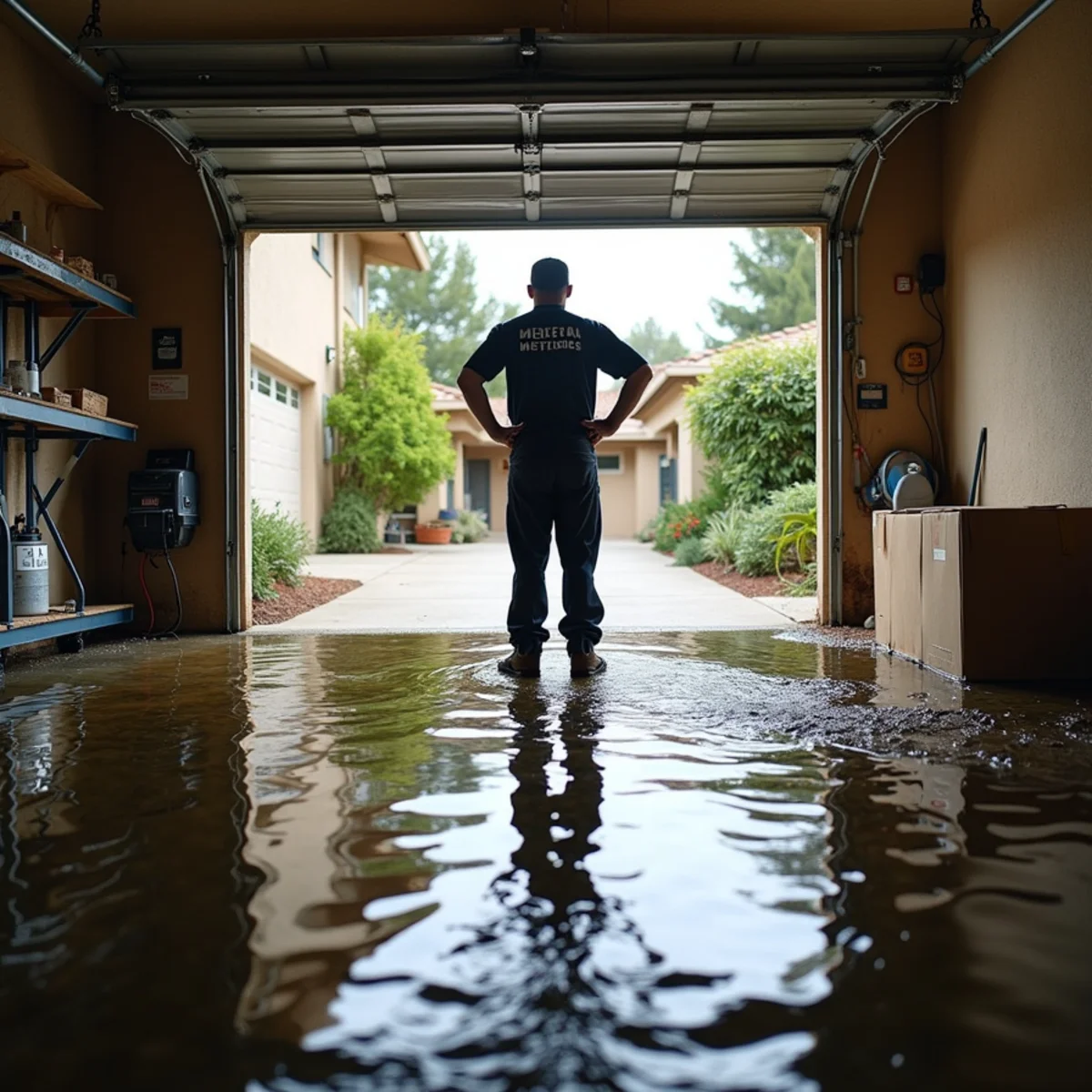
A water heater rarely fails politely. When the tank finally gives out, it can release 40, 50, or more gallons all at once, then keep feeding the flood from the supply line until someone shuts it off. If yours sits in the garage or a utility closet, as most do in Buena Park, that water spreads into drywall, flooring, and storage boxes fast.
There's an extra wrinkle with a water heater that you don't have with most leaks: it involves either gas or electricity plus a tank of scalding water. So the steps here are as much about your safety as your floors. Handle the shutoffs in the right order and you protect both.
Here's what to do the moment you find your water heater has burst, and when to bring in water heater leak cleanup to dry out everything the tank soaked.
Why Water Heaters Fail Here
Buena Park and the rest of North Orange County have hard water, and hard water is tough on water heaters. Minerals settle as sediment in the bottom of the tank, the metal corrodes from the inside, and over years the tank wall thins until it cracks or the fittings fail.
Most tanks last somewhere between 8 and 12 years, and hard water pushes them toward the shorter end of that range. If yours is over a decade old and you're seeing rusty water, popping sounds, or a little moisture at the base, it's telling you the end is near. A burst is often the last warning, not the first.
Shut Off the Water Supply
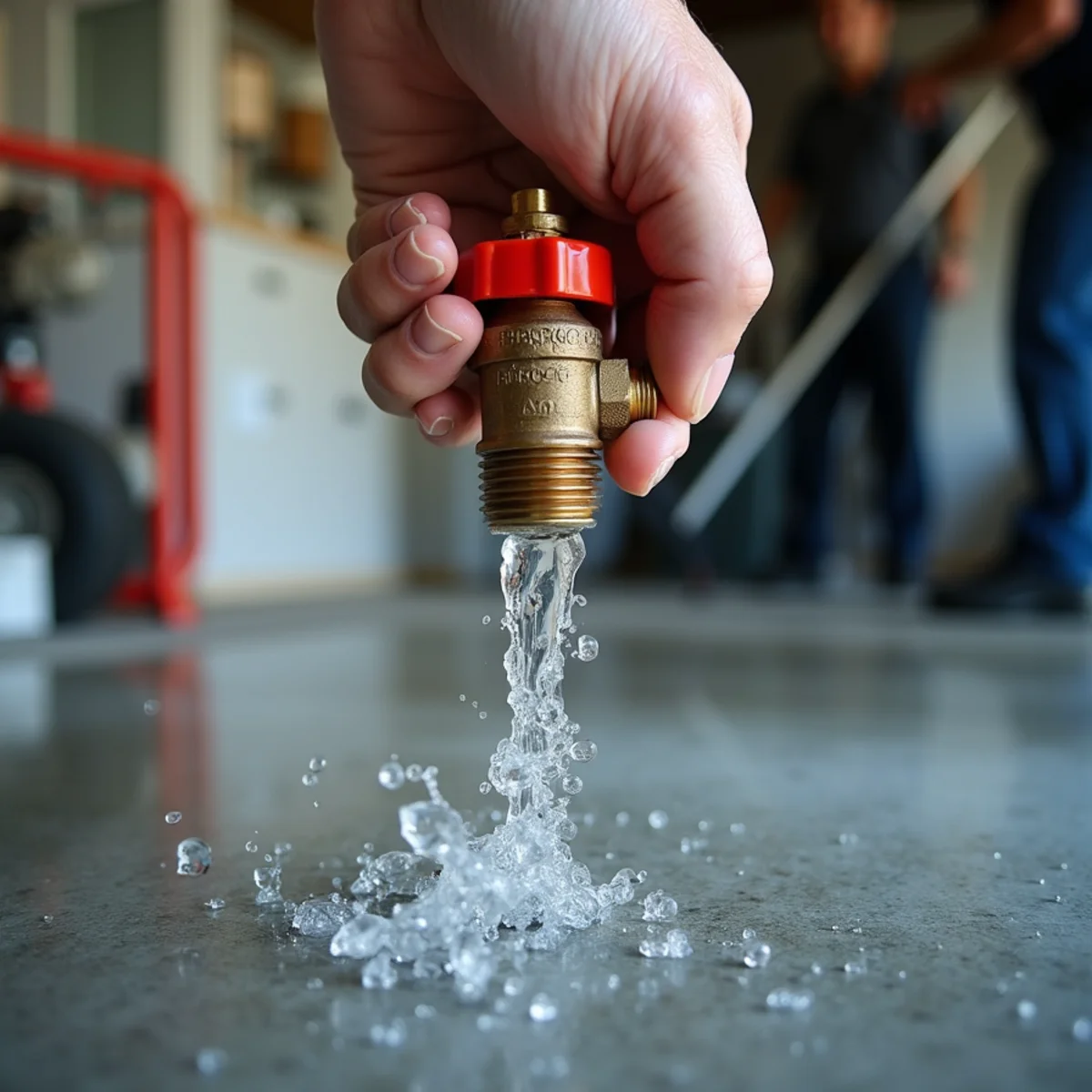
Your first move is to stop more water from feeding the tank. Look for the cold water shutoff valve on the pipe entering the top of the water heater, and turn it clockwise until it stops. This isolates the heater without shutting off water to the rest of the house.
If you can't find that valve or it won't budge, go to your home's main shutoff and close that instead. Either way, the goal is the same: stop the flow before you deal with anything else. A tank that's already burst will keep flooding as long as water is still reaching it.
Turn Off the Gas or Electricity
This step keeps you safe and prevents a second problem. A water heater that keeps heating after it's lost its water can overheat and become dangerous.
- For a gas water heater: turn the gas control knob on the front of the unit to Off. For a bigger leak, you can also close the gas shutoff valve on the supply line running to it.
- For an electric water heater: switch off the breaker that powers it at your electrical panel. Don't touch the unit's wiring while standing in water.
If you ever smell gas, don't flip any switches or light anything. Leave the house and call the gas company from outside. That takes priority over the water entirely.
Be Careful, the Water Is Hot
The water pouring out of a burst heater can be scalding, easily hot enough to burn you. Keep kids and pets well clear of the area, and don't reach into the pooling water with bare hands or feet until you're sure it's cooled.
Give it a few minutes after you've shut off the supply and the heat source. Once the water has cooled and the flow has stopped, you can move in safely to start cleanup.
Document, Then Start Clearing the Water
As with any water damage, photograph and film the scene before you clean it up. Get the failed tank, the water lines on the walls, soaked drywall and flooring, and any belongings that took on damage. This record supports your insurance claim, and we can help you assemble the claim so nothing gets missed.
Then start moving water out and belongings up. Garages are where people store the things they can't bear to lose, holiday decorations, old photos, tools, so lift what you can onto shelves or carry it to a dry room. Shop-vac or mop the standing water, and set fans blowing across the wet area to slow the moisture from wicking into walls and the slab.
Don't Underestimate a Garage Flood
It's tempting to shrug off a garage flood as no big deal, just a concrete floor. But garages in local homes usually share a wall with the living space, and that shared drywall wicks water upward into the rooms beyond. The slab underneath holds moisture too, feeding mold under baseboards and behind cabinets where you'll never see it until it smells.
Water heaters tucked into interior utility closets are worse, because the flood starts inside the living space with nowhere to drain. Either way, the water almost always travels farther than the puddle you can see, which is why professional moisture mapping matters.
Get It Dried Out Properly
Once the emergency is handled, the wet materials still need to come fully dry, and that takes more than a box fan and a weekend. We use thermal imaging and moisture meters to find every damp pocket, then place commercial air movers and dehumidifiers to dry the structure to target readings, following the IICRC S500 standard.
We help homeowners across Buena Park and nearby Stanton and Cypress recover from water heater failures, and we're locally owned, IICRC-certified, and available 24/7 with a roughly 60-minute response target. If your tank just let go, shut off the water and the gas or power, then call us at (201) 277-9344 and we'll dry it out right the first time.
Frequently Asked Questions
A typical residential tank holds 40 to 50 gallons, and it can release all of it within minutes when it fails. Worse, the supply line keeps feeding water into the tank until you shut it off, so the flooding continues until the cold water valve or your main is closed.
Shut off the water supply first to stop the flooding, then turn off the gas or electricity to make the unit safe. If you smell gas at any point, skip everything else, leave the house, and call the gas company from outside.
Sudden, accidental water heater failures are often covered by homeowners policies, while slow leaks and neglected maintenance may not be. Document the burst thoroughly and check your specific policy. We offer direct insurance billing and can help you file the claim.
A small leak is an early warning that shouldn't be ignored. It often means the tank is corroding and may fail entirely soon. Shut off the water to the unit, keep the area dry, and have it inspected. Catching it early can save you from a full flood later.
Dealing with water damage right now?
Water Damage Buena Park responds 24/7 across Buena Park & North OC.