Cabinets and vanities take water hard, and the damage usually starts where you cannot see it — inside the sink base, along the toe kick, at the bottom of the box. Most cabinet boxes are particleboard or MDF, and both swell and crumble once water gets in. Caught early, some cabinets dry and survive. Call our 24/7 line before the swelling sets in.
The material is the story. Solid-wood face frames and doors tolerate a soaking far better than the pressed-wood boxes behind them. Particleboard and MDF wick water, swell, and lose their structure, and once a shelf or base has puffed up and started to flake, drying will not bring it back.
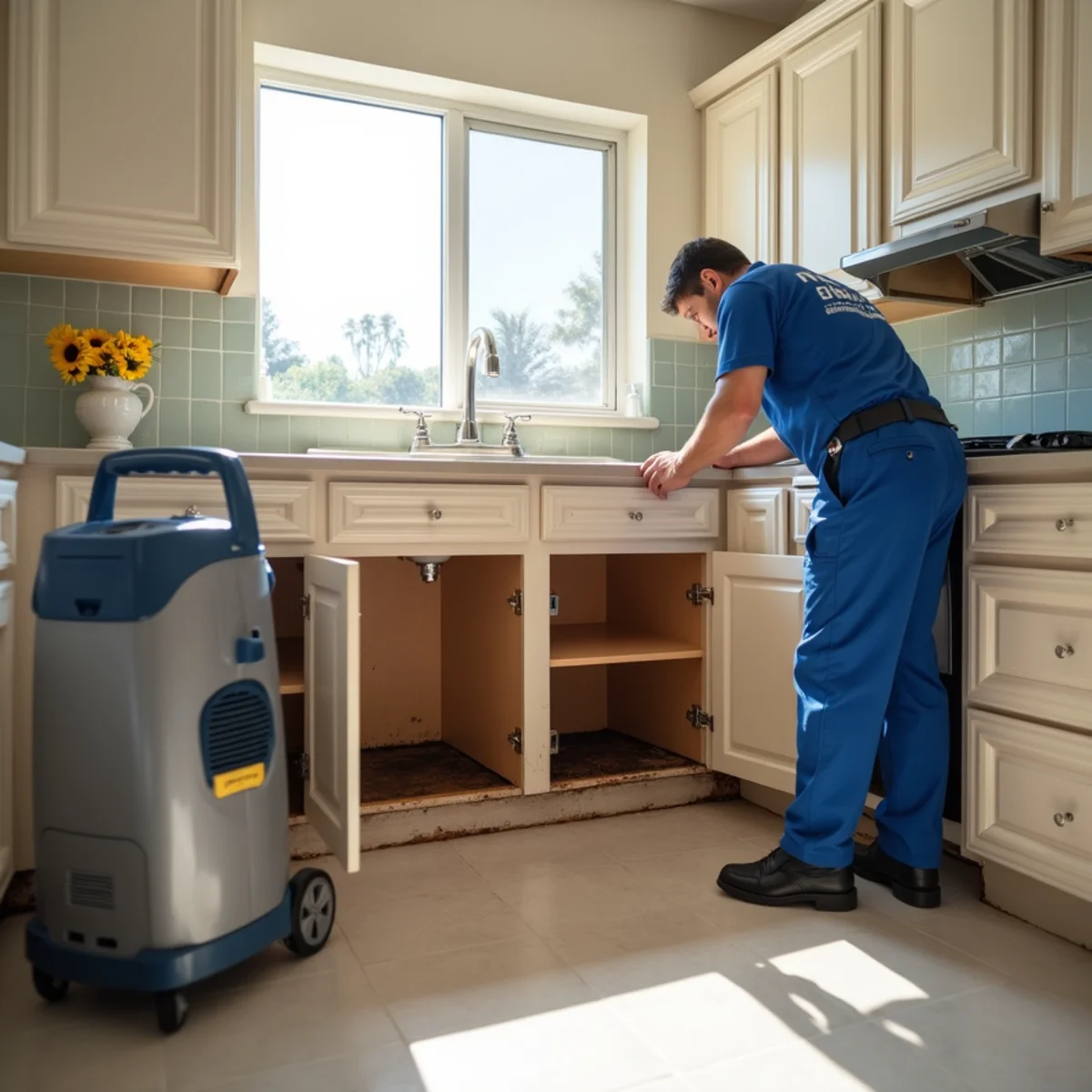
We dry cabinets from the inside — pulling drawers, removing kick plates, and directing air into the boxes and the wall cavity behind them. We tell you honestly which pieces will dry and hold and which need to be rebuilt, so you are not paying to dry something that is already lost.
IICRC-certified, licensed and insured, and locally owned. We document for your claim and bill your carrier directly when your policy allows.
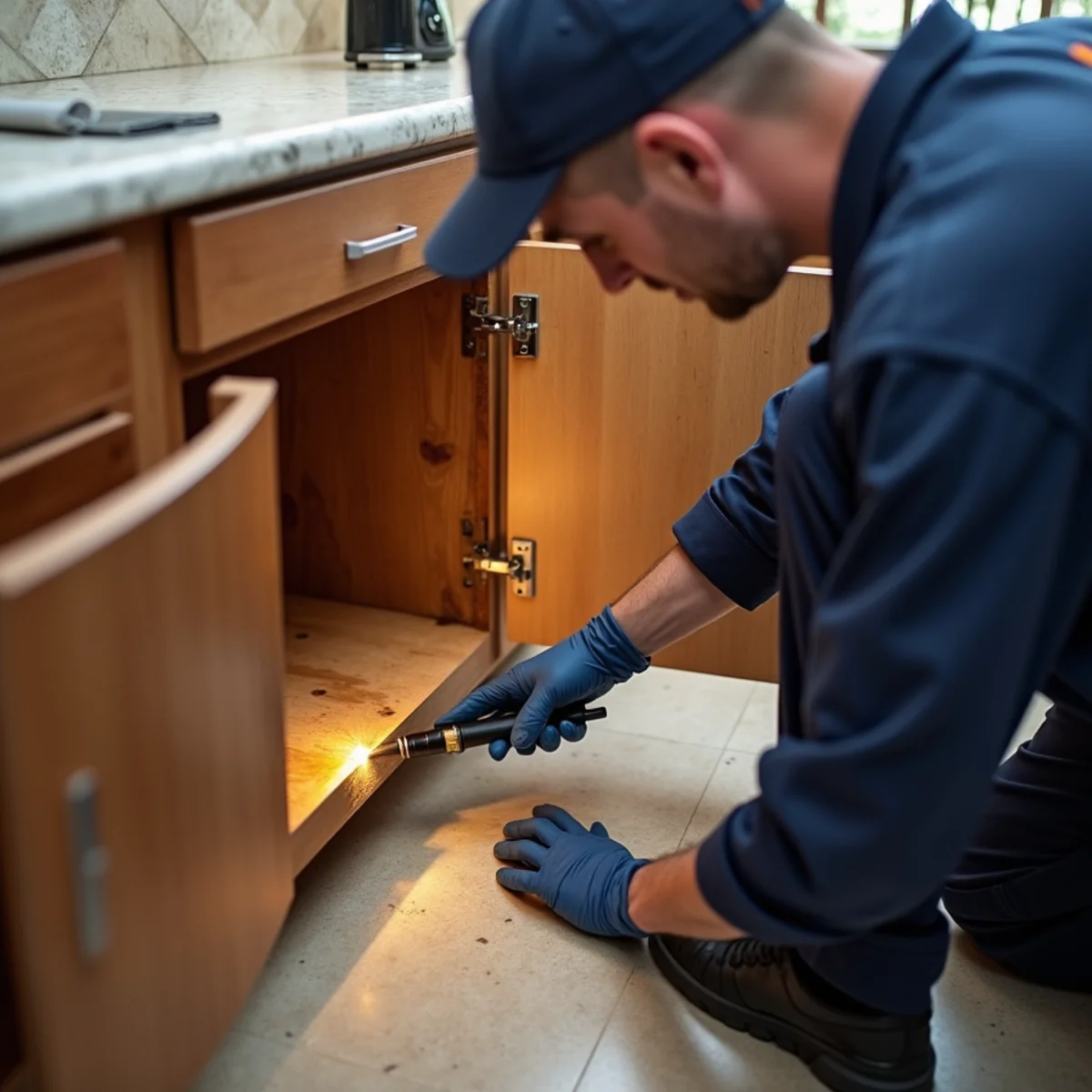
Signs You Need Cabinet & Vanity Water Damage Repair in Buena Park
Water damage rarely announces itself politely. Here's what tends to signal that it's time to call a professional:
- Swollen, puffy, or soft particleboard at the cabinet base or shelves
- Delaminating veneer or laminate peeling off the box
- A warped or sagging cabinet floor under the sink
- Dark water lines or staining along the toe kick
- Doors and drawers that no longer sit square or close right
- A musty smell inside the sink base or vanity
- Buckling or lifting where the cabinet meets the floor
What's Included in Our Cabinet & Vanity Water Damage Repair
Cabinet & Vanity Water Damage Repair with us is a complete, done-for-you service — not a partial fix that leaves you chasing other contractors. Here's what a typical job includes:
- Toe-kicks and cabinet bases checked for wicking and swelling
- Cabinets dried with directed airflow and drilled vent holes
- Countertops and sink base inspected for trapped water
- Moisture readings taken behind and beneath the cabinet boxes
- Wall cavity behind cabinets dried without full teardown where possible
- Antimicrobial applied to damp particleboard and wall framing
- Honest salvage call — dry in place or replace swollen boxes
Why This Matters in Buena Park & North OC
Under-sink leaks are one of the most common calls we get across Buena Park, and the kitchen sink base and bathroom vanity are usually the first casualties. A slow supply-line drip or a failed garbage-disposal seal soaks the cabinet floor for days before anyone notices. In the area's aging homes with older copper plumbing, these small hidden leaks are especially frequent.
The area's many condos and apartments often came with builder-grade particleboard cabinetry, which has the least tolerance for water of any option. When an upstairs leak or a dishwasher overflow reaches those boxes, they swell fast. We are honest with residents and property managers about when a box is genuinely salvageable and when replacement is the sound choice.
Cabinets also hide wall damage. Water that ruins a sink base is usually wetting the drywall and framing behind it too, and often the flooring underneath. We pull the cabinet away or open it up to check what is behind and below, because drying the box alone would leave a wet wall to grow mold out of sight.
Our Cabinet & Vanity Water Damage Repair Process
Our cabinet process dries from the inside out and separates what survives from what needs rebuilding.
- 1
Emergency Contact & Rapid Assessment
A real person answers your call 24/7 — never a voicemail. We ask a few quick questions to gauge severity, then dispatch a crew immediately. While you wait, we'll walk you through shutting off the water and safely documenting the damage for your insurer.
- 2
Water Extraction
Our technicians arrive with truck-mounted and portable extraction units to pull out standing water fast — the single biggest factor in limiting damage. We move furniture and belongings to dry areas and stop the spread before it reaches new rooms.
- 3
Drying & Dehumidification
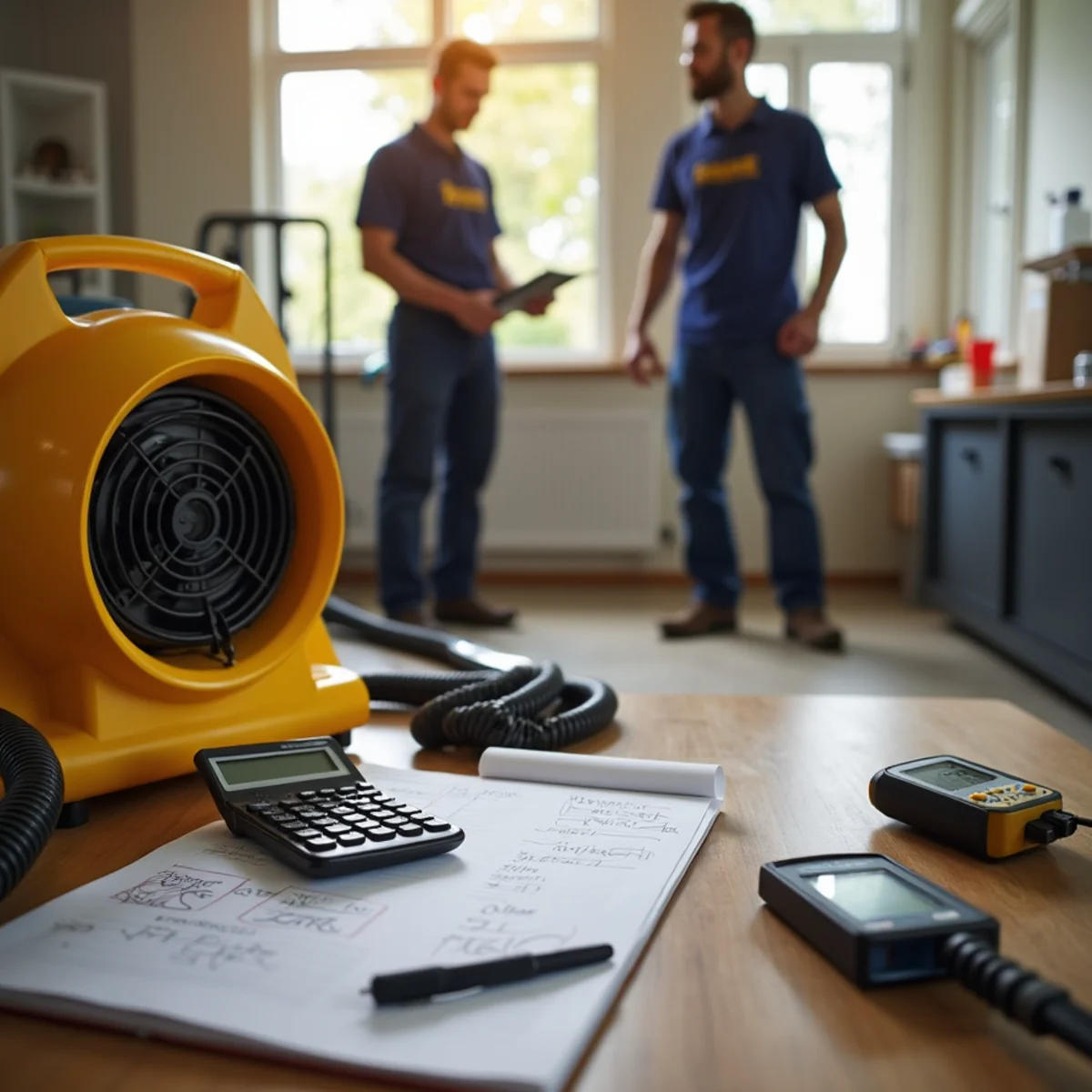
We position industrial air movers and dehumidifiers to dry structural materials from the inside out, then monitor moisture daily with professional meters and thermal imaging so hidden dampness behind walls and under floors doesn't turn into mold.
- 4
Cleaning & Sanitizing
Every affected surface is cleaned with antimicrobial and anti-fungal treatments. For gray- and black-water losses we follow strict IICRC S500 containment, PPE, and disposal protocols to keep your home safe.
- 5
Restoration & Reconstruction
Once your property is dry, we repair or replace drywall, flooring, cabinetry, and paint — and put it back the way it was. One company handles the whole job, from the first extraction to the final coat of paint, so you're never juggling three contractors.
What Affects the Cost of Cabinet & Vanity Water Damage Repair
We give you a clear, upfront estimate after a free on-site assessment — no guessing, no fake numbers. The final figure depends on factors like:
- Cabinet material — solid wood versus particleboard or MDF
- How long the cabinet stayed wet before drying began
- Whether the boxes can be dried in place or must be rebuilt
- Damage to the wall and flooring behind and beneath the cabinet
- Countertop removal and reset if boxes need replacing
- Matching new cabinetry or refinishing to the existing run
Because we document everything to insurer standards, most of this is typically handled through your homeowner's claim — and we bill your insurance directly.
Need help right now?
Certified crews on standby, 24/7. We'll be there fast.
Cabinet & Vanity Water Damage Repair FAQs
It depends on the material and the timing. Solid-wood cabinets that are dried quickly often survive. Particleboard and MDF boxes that have swollen, softened, or started to flake are generally past saving, because the pressed material does not return to shape once it absorbs water. We assess each piece and only recommend replacing what genuinely will not hold.
Because water rarely stops at the cabinet. A sink-base leak typically wets the drywall and framing behind the cabinet and the flooring beneath it. If we dry only the cabinet and leave the wall wet, mold grows out of sight and comes back as a bigger problem. We open things up and meter behind and below to dry the whole area.
That misalignment usually means the box itself has swollen or shifted from absorbing water. If the box is solid wood and we dry it before it distorts too far, alignment often comes back. If a pressed-wood box has permanently swollen, the fix is replacing the affected cabinet — a warped particleboard box will not square up again.
We open it up and dry it from the inside. That means pulling the drawers, removing the toe-kick plate, sometimes drilling discreet ports, and directing air into the boxes and the wall cavity behind them while dehumidifiers pull the moisture out. Many cabinets, especially solid-wood ones, dry in place this way when we reach them in time.
Very different, and it drives whether we can save them. Particleboard and MDF are wood fibers held together with glue; once they soak up water they swell, crumble at the edges, and rarely return to full strength, so the boxes and shelves often need replacing. Solid wood and quality plywood cabinets hold up far better and can usually be dried in place with the toe kick opened and air directed into the base. We check the construction first and give you a straight read on what is worth drying.