Hardwood and water are natural enemies, and time is the whole game. The moment water reaches a wood floor, the boards start pulling it in and moving — cupping at the edges, then buckling up off the subfloor. Act fast and much of it can be saved. Wait, and you are looking at replacement. Call our 24/7 line the moment you find water on wood.
Wood is dimensional. It swells when it takes on moisture and shrinks as it dries, and that movement is what causes cupping, crowning, and gaps between boards. The damage is not only cosmetic — trapped moisture under the finish also feeds mold in the subfloor below.
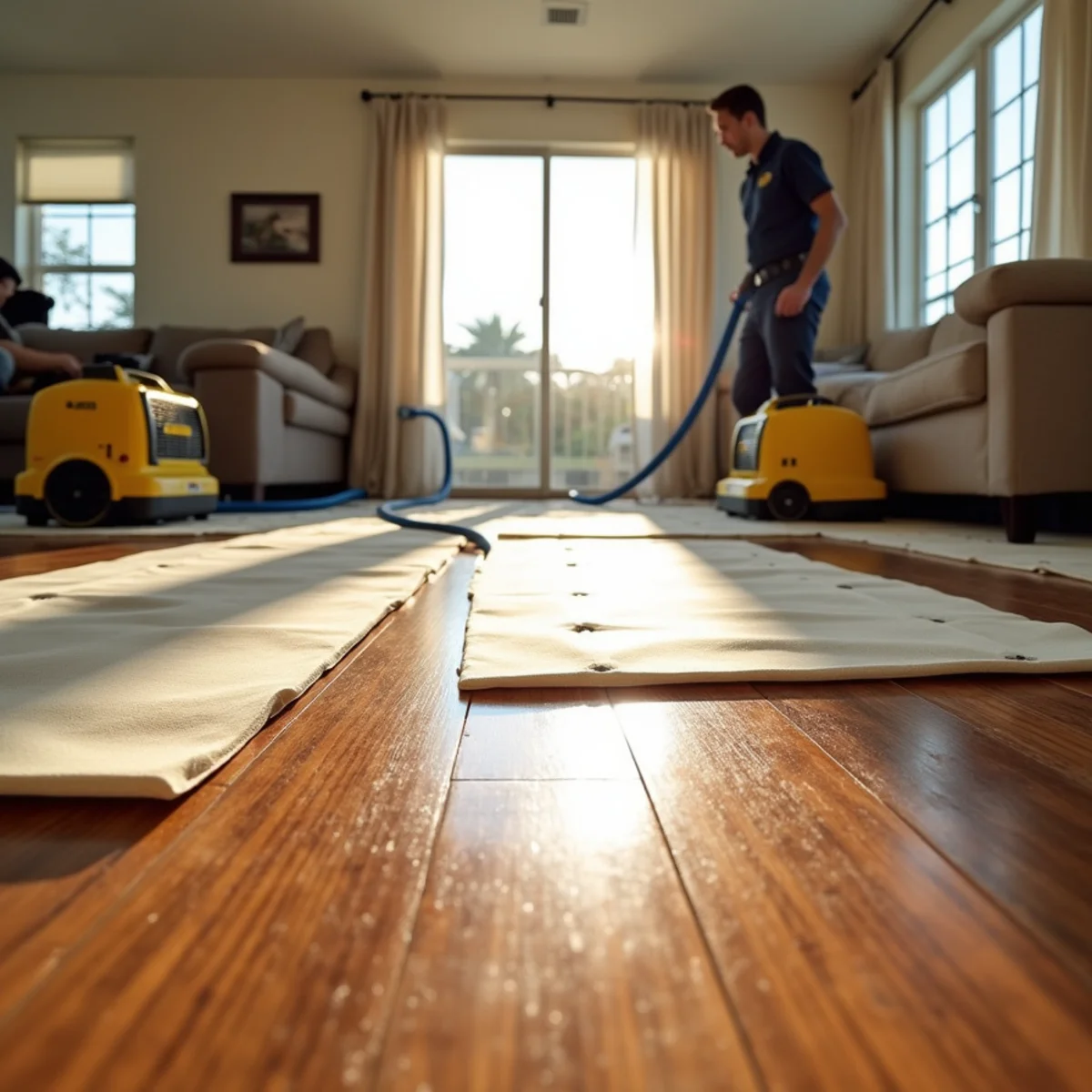
We pull the standing water immediately, then dry the floor from both the surface and underneath using specialty drying mats and directed airflow. Getting moisture out of the wood before it distorts permanently is what makes the difference between drying and demolition.
IICRC-certified, licensed and insured, and local. We document the loss for your claim and bill your carrier directly when your policy allows.
Signs You Need Hardwood Floor Water Damage in Buena Park
Water damage rarely announces itself politely. Here's what tends to signal that it's time to call a professional:
- Boards cupping — the edges rising higher than the centers
- Crowning — the centers of boards rising above the edges
- Buckling, where planks lift completely off the subfloor
- Gaps opening or boards separating along the seams
- Dark staining, discoloration, or a cloudy finish
- A soft, spongy feel or movement when you walk across it
- Cupped boards that stay raised long after the surface looks dry
What's Included in Our Hardwood Floor Water Damage
Hardwood Floor Water Damage with us is a complete, done-for-you service — not a partial fix that leaves you chasing other contractors. Here's what a typical job includes:
- Surface water extracted before it wicks into the board seams
- Specialty hardwood drying mats pull moisture from the planks
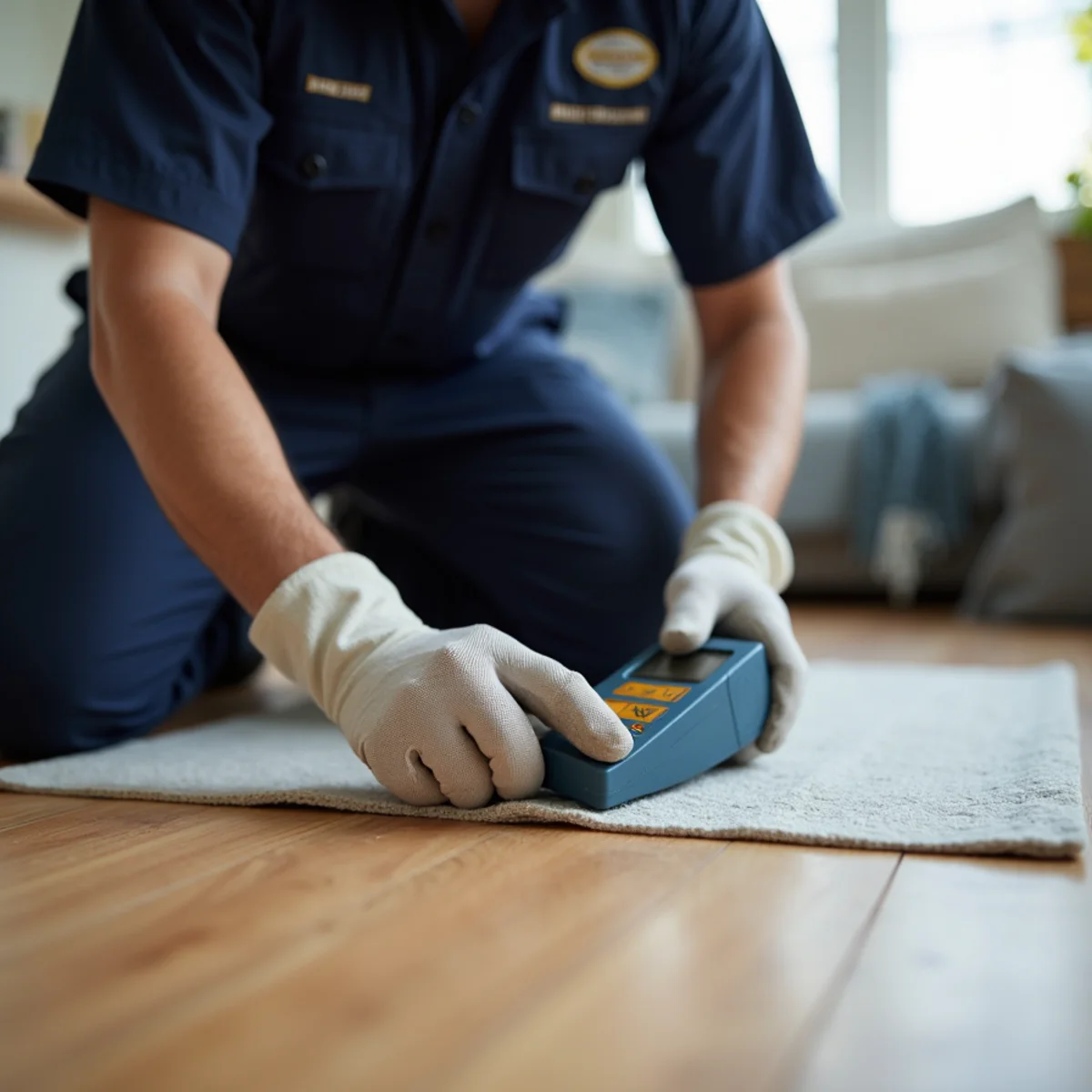
- Cupping and crowning monitored with a wood moisture meter
- Subfloor moisture checked so the surface isn't dried too fast
- Dehumidifiers held at the ideal grain range for wood
- Boards saved where possible; only unsalvageable planks replaced
- Sand-and-refinish coordination once the floor reaches dry standard
Why This Matters in Buena Park & North OC
A lot of Buena Park homes sit directly on a concrete slab, and that changes how we dry a wood floor. Slab holds and releases moisture slowly, so an engineered or solid floor glued or nailed over slab can be wet from below long after the top feels dry. We meter the slab and the wood, not just the surface, before we call a floor dry.
When a slab leak or a pinhole leak in the old copper plumbing surfaces under a wood floor, the water spreads sideways beneath the finish. By the time a homeowner near Los Coyotes or off Beach Boulevard notices a single cupped plank, the wet area underneath is usually larger than the visible one. We map it fully.
Engineered wood is common in the newer condos and remodels around here, and it behaves differently than solid oak. Its thin wear layer tolerates far less sanding, so the salvage window is tighter. We factor the floor type into how aggressively and how fast we dry.
Our Hardwood Floor Water Damage Process
Our hardwood process races the clock to dry the wood before the damage becomes permanent.
- 1
Emergency Contact & Rapid Assessment
A real person answers your call 24/7 — never a voicemail. We ask a few quick questions to gauge severity, then dispatch a crew immediately. While you wait, we'll walk you through shutting off the water and safely documenting the damage for your insurer.
- 2
Water Extraction
Our technicians arrive with truck-mounted and portable extraction units to pull out standing water fast — the single biggest factor in limiting damage. We move furniture and belongings to dry areas and stop the spread before it reaches new rooms.
- 3
Drying & Dehumidification
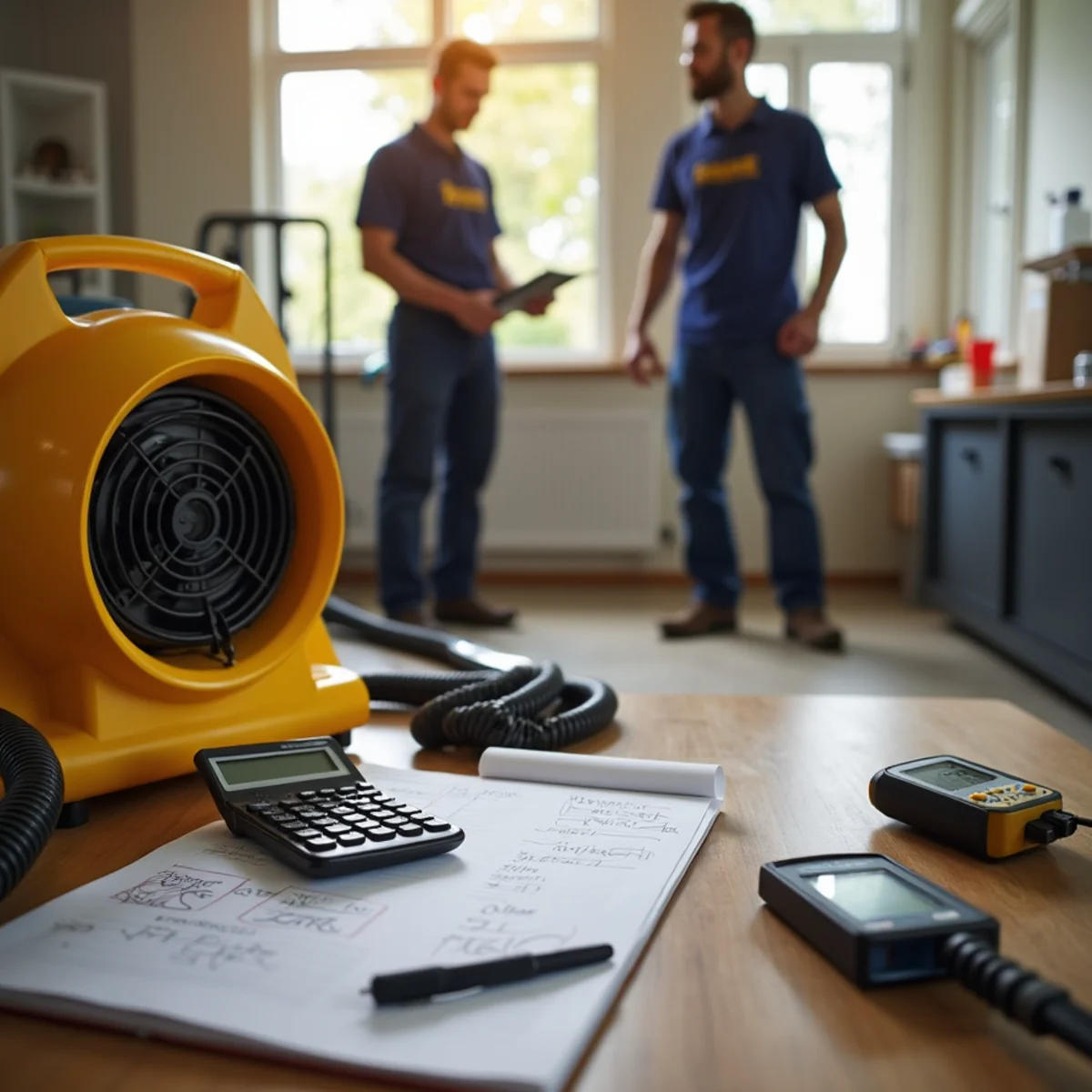
We position industrial air movers and dehumidifiers to dry structural materials from the inside out, then monitor moisture daily with professional meters and thermal imaging so hidden dampness behind walls and under floors doesn't turn into mold.
- 4
Cleaning & Sanitizing
Every affected surface is cleaned with antimicrobial and anti-fungal treatments. For gray- and black-water losses we follow strict IICRC S500 containment, PPE, and disposal protocols to keep your home safe.
- 5
Restoration & Reconstruction
Once your property is dry, we repair or replace drywall, flooring, cabinetry, and paint — and put it back the way it was. One company handles the whole job, from the first extraction to the final coat of paint, so you're never juggling three contractors.
What Affects the Cost of Hardwood Floor Water Damage
We give you a clear, upfront estimate after a free on-site assessment — no guessing, no fake numbers. The final figure depends on factors like:
- How quickly drying started after the water reached the wood
- Solid versus engineered flooring and its remaining wear layer
- Whether the floor is nailed, glued, or floating over slab
- The area affected below the surface, not just what shows
- The degree of cupping or buckling already present
- Whether refinishing or partial board replacement is needed
Because we document everything to insurer standards, most of this is typically handled through your homeowner's claim — and we bill your insurance directly.
Need help right now?
Certified crews on standby, 24/7. We'll be there fast.
Hardwood Floor Water Damage FAQs
Cupping alone is often reversible if we start drying quickly. As the wood releases moisture evenly, cupped boards can flatten back out, and a light sand and refinish makes them look right again. Buckled boards that have lifted off the subfloor are usually past saving. The single biggest factor is how fast drying begins.
Days, not weeks. Wood starts absorbing water immediately and distorting within the first day or two. The faster we extract and start directed drying, the more boards we save. Waiting even a few extra days can be the difference between a refinish and a full replacement, which is why we treat wood floors as an emergency.
Because that is where the water hides. Moisture sits between the wood and the subfloor — or in the slab beneath it — where surface air movers cannot reach. We use specialty mat systems that draw moisture up through the boards, and we meter underneath, so the floor is dry all the way through and not just on top.
Yes. A hardwood floor can feel dry on the surface while the subfloor or slab underneath is still wet, and that trapped moisture leads to cupping, mold, and finish failure weeks later. A moisture reading from below is the only way to know it is truly dry. A quick inspection now is cheaper than a redo later.
Often, but not always. Mild cupping frequently flattens back out on its own once the boards return to their normal moisture content, which is why we dry first and judge the finish later. If cupping or crowning stays after the wood is fully dry, a sand-and-refinish evens the surface and blends the repair into the rest of the floor. We use specialized floor-drying mats to pull water from beneath the boards so we can save as much of your original hardwood as possible.