You walk into the kitchen and the oak boards near the dishwasher feel spongy underfoot. The edges have started to rise, and there is a faint musty smell. Your first instinct is probably that the whole floor is ruined and has to come out. Often, that is not true.
Hardwood reacts to water in predictable ways, and much of that reaction is reversible if the wood is dried correctly and quickly. The expensive mistake homeowners in Buena Park make is tearing out boards that would have returned to shape on their own. The second mistake is waiting, letting water sit until the damage really is permanent.
Here is how to tell the difference between a floor that can be saved and one that cannot, and what the drying process actually involves.
Read the Damage: Cupping, Crowning, and Buckling
Wood moves when it takes on moisture. The pattern of that movement tells you how bad the situation is and often where the water came from.
- Cupping: the edges of each board sit higher than the center, creating a subtle washboard feel underfoot. This happens when the underside of the board is wetter than the top, which is the common case with a leak or a spill that soaked through to the subfloor. Mild cupping is the most hopeful sign on this list.
- Crowning: the center of each board is higher than the edges. This usually shows up later, often after a floor was sanded flat while still damp, or when the top surface absorbed more moisture than the bottom.
- Buckling and lifting: boards pull up and away from the subfloor entirely, sometimes popping loose along a seam. This is the most severe form and means the wood has lost its grip on the subfloor. Buckled boards rarely go back down.
Cupping and crowning describe shape. Buckling describes failure. Knowing which one you are looking at is the first real step toward a decision.
Dry First, Decide Later
The single most important rule with wet hardwood is to dry it before you judge it. A cupped floor at the peak of a water event looks alarming, but wood that cupped because of moisture underneath will often relax and flatten as its moisture content returns to normal.
Pulling up boards on day two, while they are still swollen, throws away material that might have been fine in a few weeks. It also means you pay twice: once to demo a floor that was recoverable, and again to install a new one.
The honest version of this is that drying buys you information. Once the wood is back to a stable, verified moisture content, the remaining shape is what you actually have to deal with. That is the point to decide on sanding, refinishing, or replacement, not before.
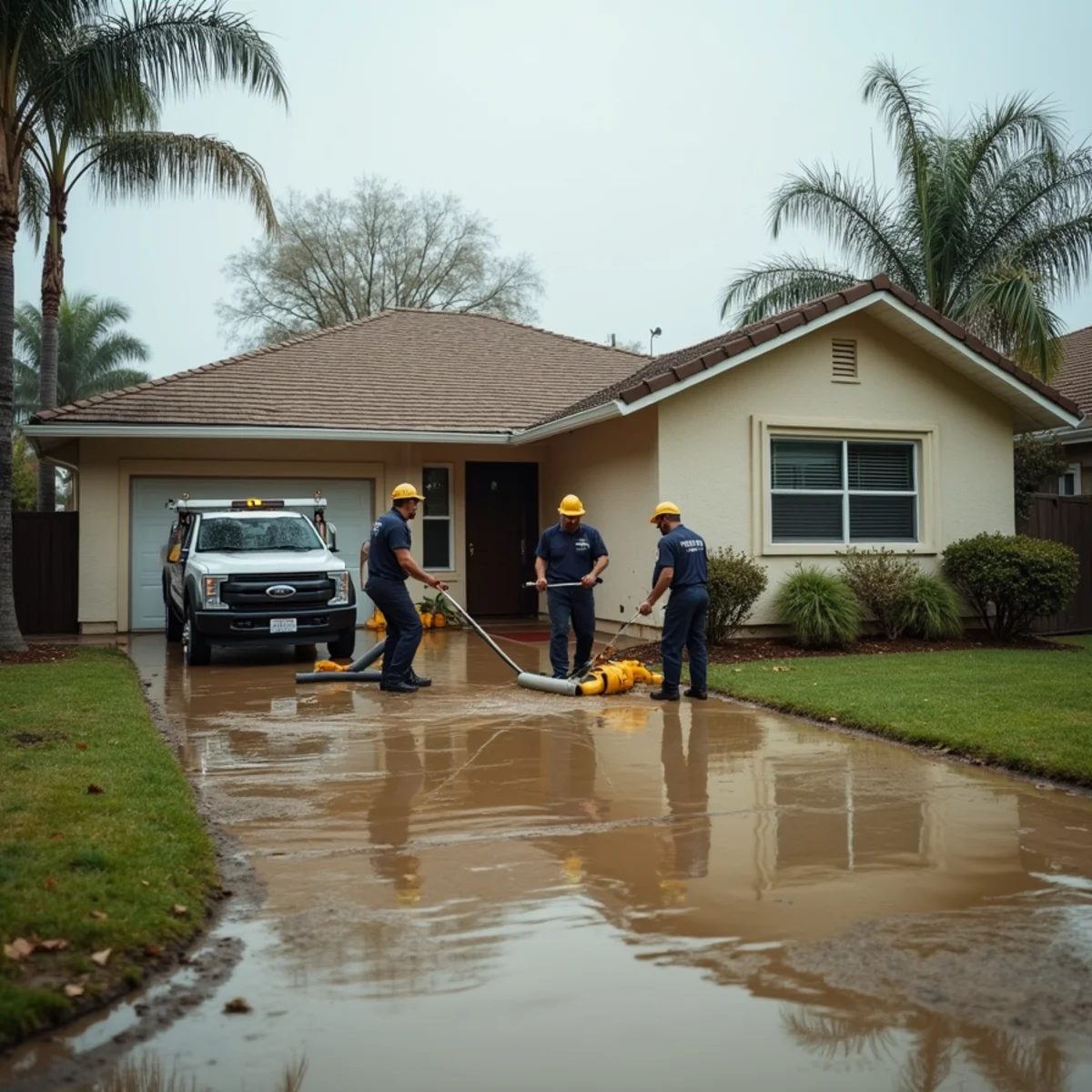
This is also why fast water extraction matters so much. The sooner standing water and saturation are pulled out, the more of the floor stays in the recoverable column.
How Hardwood Is Actually Dried
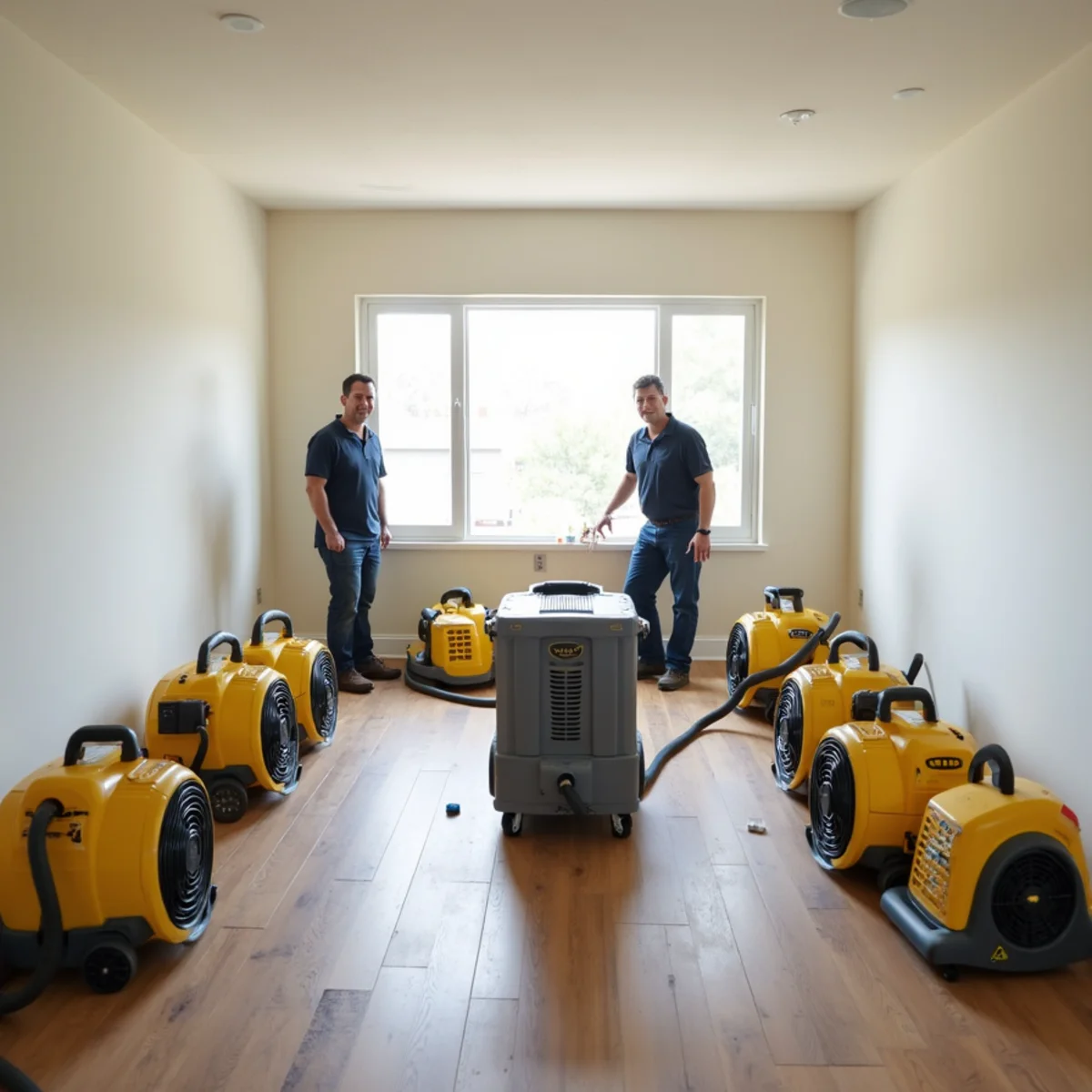
Drying a wood floor is not the same as running a box fan over it. Air moving across the top does little for water trapped beneath the boards and in the subfloor, which is exactly where cupping moisture lives.
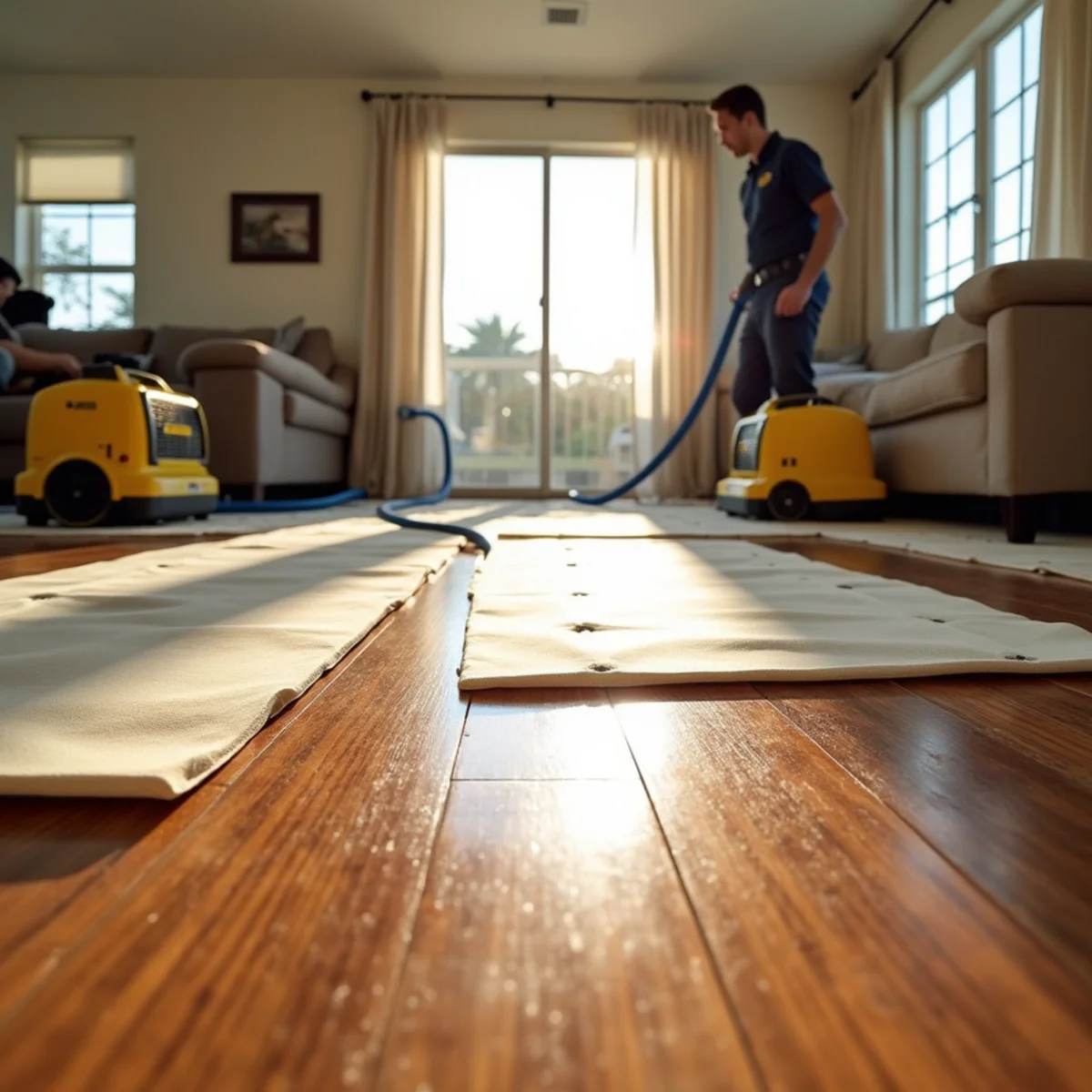
Specialty floor-drying systems use mats placed directly on the surface, sealed to the boards, and connected to a vacuum unit. They pull moisture up through the wood from underneath, drawing it out of the board and the subfloor rather than waiting for it to evaporate on its own.
- Mats are positioned over the wet area and sealed so the system can draw through the flooring.
- The vacuum and air movers run continuously, usually for several days, while moisture is pulled out.
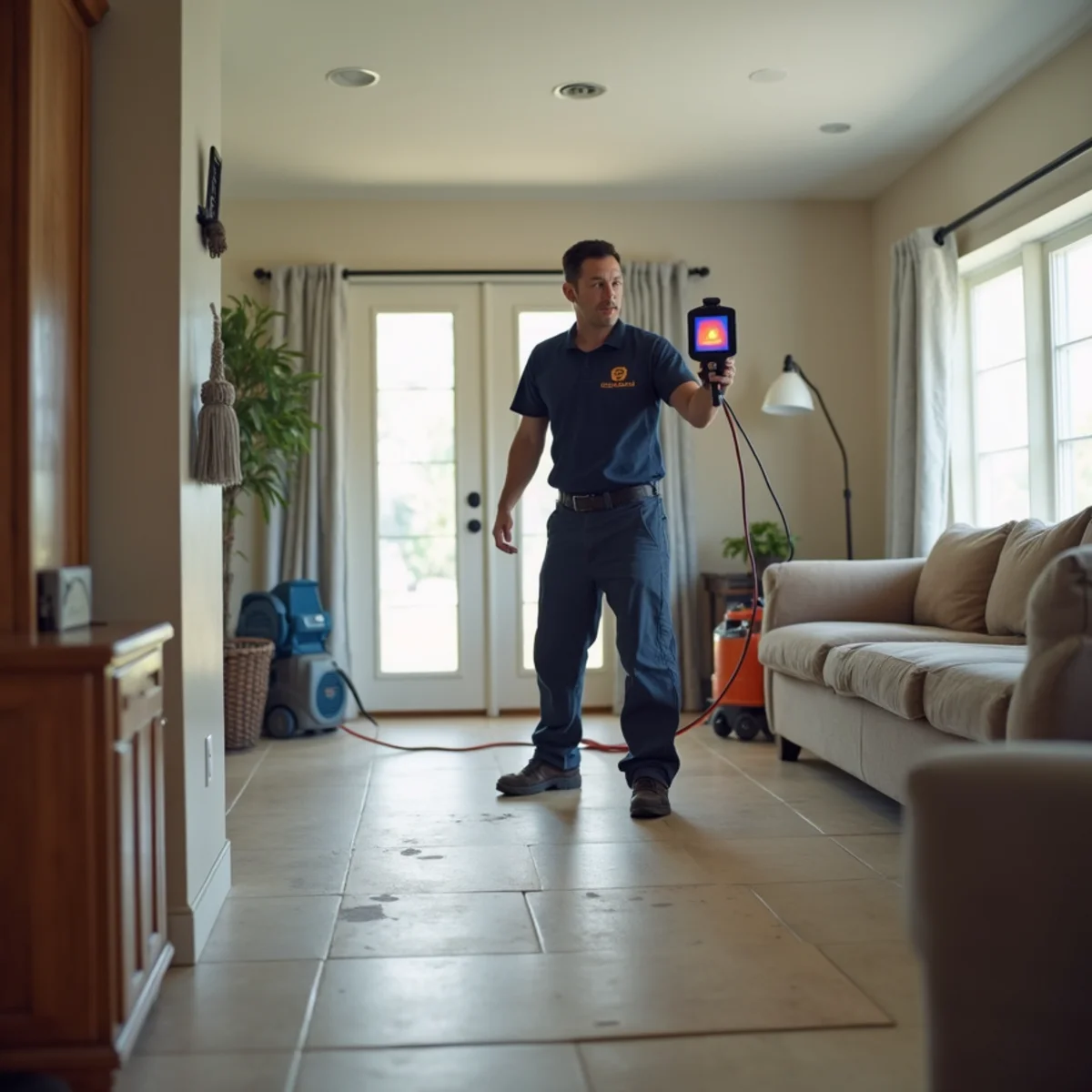
- Moisture content is measured with a meter, not guessed, and drying continues until the wood reaches a target that matches the surrounding dry flooring.
That verified endpoint is the part that protects you. Calling a floor dry because it feels dry on top is how crowning and hidden mold problems start. Proper structural drying treats the subfloor and framing underneath the hardwood as part of the job, not an afterthought.
When Cupping Remains: Sand and Refinish
Sometimes a floor dries to a stable moisture content and still has mild cupping or crowning left over. That does not automatically mean replacement.
Once the wood is fully dry and has stabilized, a floor with residual cupping can often be sanded flat and refinished. Sanding while the wood is still damp is the mistake that causes crowning later, so this step only happens after the moisture readings confirm the floor has settled.
Solid hardwood has enough thickness to be sanded several times over its life, so a refinish after drying is frequently all a cupped floor needs to look right again. Our hardwood floor water damage repair work centers on getting the floor to that stable point first, then matching the refinish to the rest of the room.
When Boards Really Must Be Replaced
Some damage is past saving, and pretending otherwise just wastes drying time. Replace boards when you see:
- Buckling or boards lifted off the subfloor, where the wood has physically separated and will not reseat.
- Long-soaked wood that sat in water for days, which tends to stay dimensionally unstable even after drying.
- Black staining in the grain, a sign of deep water intrusion and possible mold that bleaching and sanding will not resolve.
- Engineered wood that has delaminated, meaning the thin veneer top layer has peeled or bubbled away from its plywood core. Engineered boards have very little sandable surface and do not recover from delamination.
In many homes the damage is localized, so replacement can mean swapping the worst boards and refinishing the whole area to blend, rather than redoing an entire floor.
Slab vs. Raised Foundations in Buena Park
How your home is built changes how water behaves under the floor. Buena Park has both slab-on-grade homes and older houses on raised foundations, and the drying approach differs between them.
On a slab, wood is usually glued or nailed to a plywood layer over concrete, or sometimes fixed closer to the slab itself. Water has nowhere to drain, so it spreads sideways under the flooring and lingers against the concrete. Mats and careful monitoring of the slab become important, because concrete releases moisture slowly.
On a raised foundation, water can reach the subfloor and the crawl space below. That gives it somewhere to go, but it also means the framing and the underside of the subfloor need to be checked and dried, not just the visible floor.
Southern California's generally dry air helps evaporation once a floor is opened up to airflow, but it also hides interior moisture: a wet subfloor under a dry-feeling surface reads as fine to the touch while staying damp underneath. That gap is why metered verification matters here specifically.
Act Fast: The Clock Is the Deciding Factor
The line between a floor you save and a floor you replace is mostly about time. Wood dried within the first day or two has a far better chance of flattening out than wood left wet through a weekend.
Mold can begin establishing in a day or two in a damp subfloor, and the longer wood stays saturated, the more likely the damage becomes permanent. If you want a sense of the full sequence from extraction through drying and refinishing, our guide on how long restoration takes walks through it.
We serve Buena Park and nearby communities including La Habra, and because we are locally owned, response times stay short, which is exactly what wet hardwood needs.
If your hardwood got wet, the smart move is to start drying now and decide about replacement later. Call Water Damage Buena Park at (201) 277-9344. We answer 24/7 and aim to be on-site in about 60 minutes to begin extraction and set up floor-drying before the damage sets.
Frequently Asked Questions
It often can be saved. Mild cupping from moisture underneath frequently flattens once the wood is dried to a normal, verified moisture content. The key is drying fast and judging the floor afterward, not tearing it out while the boards are still swollen.
Specialty floor-drying mats and air movers typically run for several days, and the exact time depends on how long the wood was wet, the subfloor, and whether the home is on a slab or raised foundation. Drying continues until a moisture meter confirms the wood matches the surrounding dry flooring.
Because a floor at the peak of a water event looks worse than it will after drying. Removing boards that would have flattened on their own means paying to demo a recoverable floor and then paying again to replace it. Dry first, then decide.
Buckling where boards have lifted off the subfloor, wood that sat soaked for days, black staining in the grain, and engineered wood that has delaminated. These usually cannot be dried back into a usable floor and the affected boards need replacement.
Yes. On a slab, water spreads sideways and lingers against the concrete, which releases moisture slowly, so the slab itself has to be monitored. On a raised foundation, the subfloor and crawl space below also need to be checked and dried.
Dealing with water damage right now?
Water Damage Buena Park responds 24/7 across Buena Park & North OC.