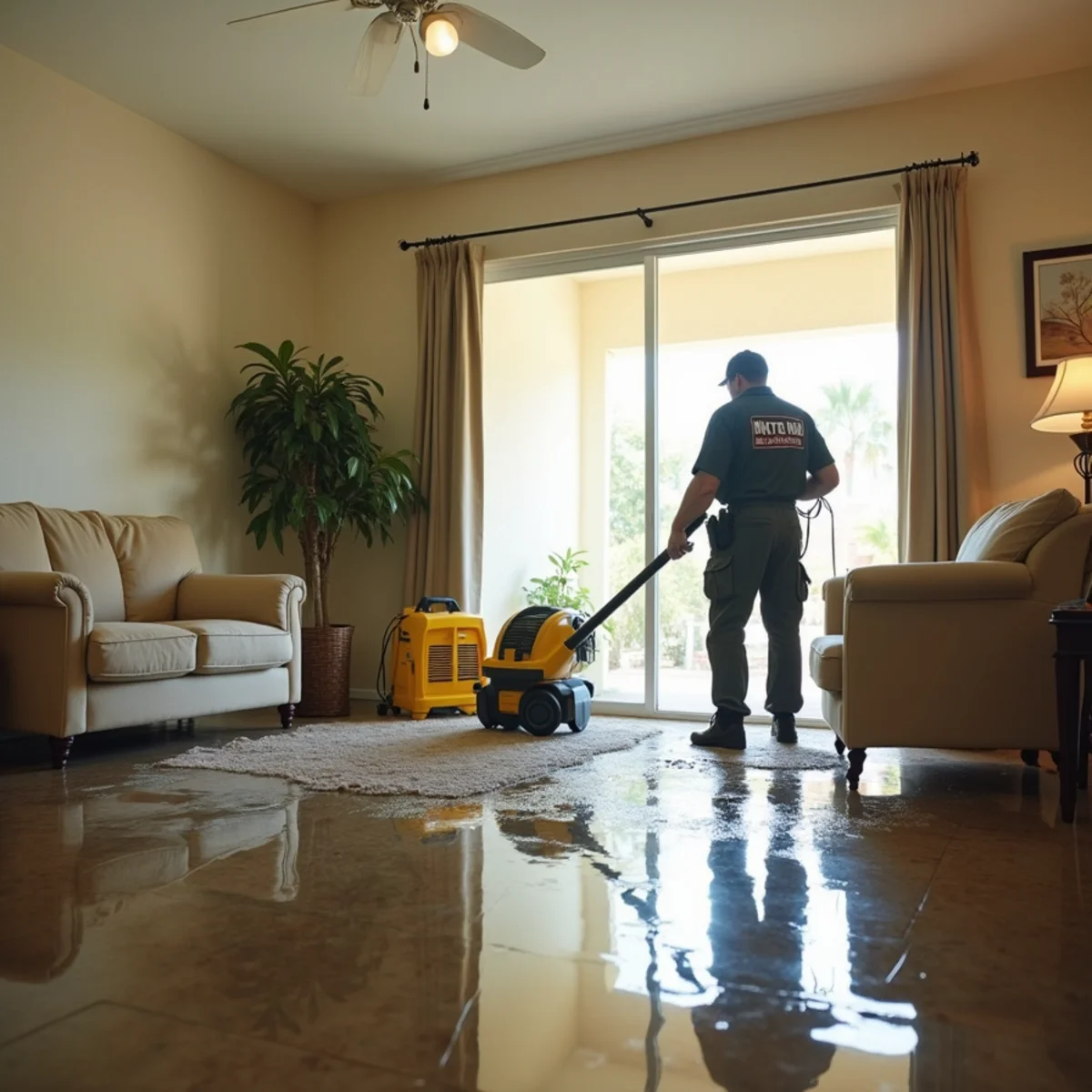
Your ceiling is dripping, you call a company out, and a few days later an estimate lands in your inbox with two sections that sound almost identical: one for mitigation, one for restoration. Your insurance adjuster uses the same two words, sometimes as separate phases of the claim. It is a fair question to ask what the difference actually is and why you are paying for both.
The short answer is that mitigation and restoration are two stages of the same recovery, done in order. Mitigation is the emergency work that stops the damage from getting worse. Restoration is the rebuild that puts your home back the way it looked before the leak. Knowing where one ends and the other begins makes your estimate far easier to read, and it helps you tell whether a contractor is handling the whole job or only part of it.
Mitigation vs. Restoration in One Sentence
Mitigation limits and stabilizes the loss. Restoration rebuilds and refinishes. On most Buena Park jobs the same crew does both, but the two phases are billed, scheduled, and sometimes even approved by your insurer separately.
Picture a burst supply line under a kitchen sink. Mitigation is shutting off the water, pulling out the soaked cabinet base, extracting the standing water, and running equipment until the subfloor is dry. Restoration is installing the new cabinet, laying new flooring, and repainting the wall so the kitchen looks untouched.
What Water Mitigation Actually Covers
Mitigation is the fast, protective phase. Its entire goal is to keep a bad day from turning into a structural and mold problem. This is where our water damage restoration crews spend the first hours on site. Typical mitigation steps include:
- Stopping or isolating the source, whether that means closing a valve, capping a line, or tarping a roof
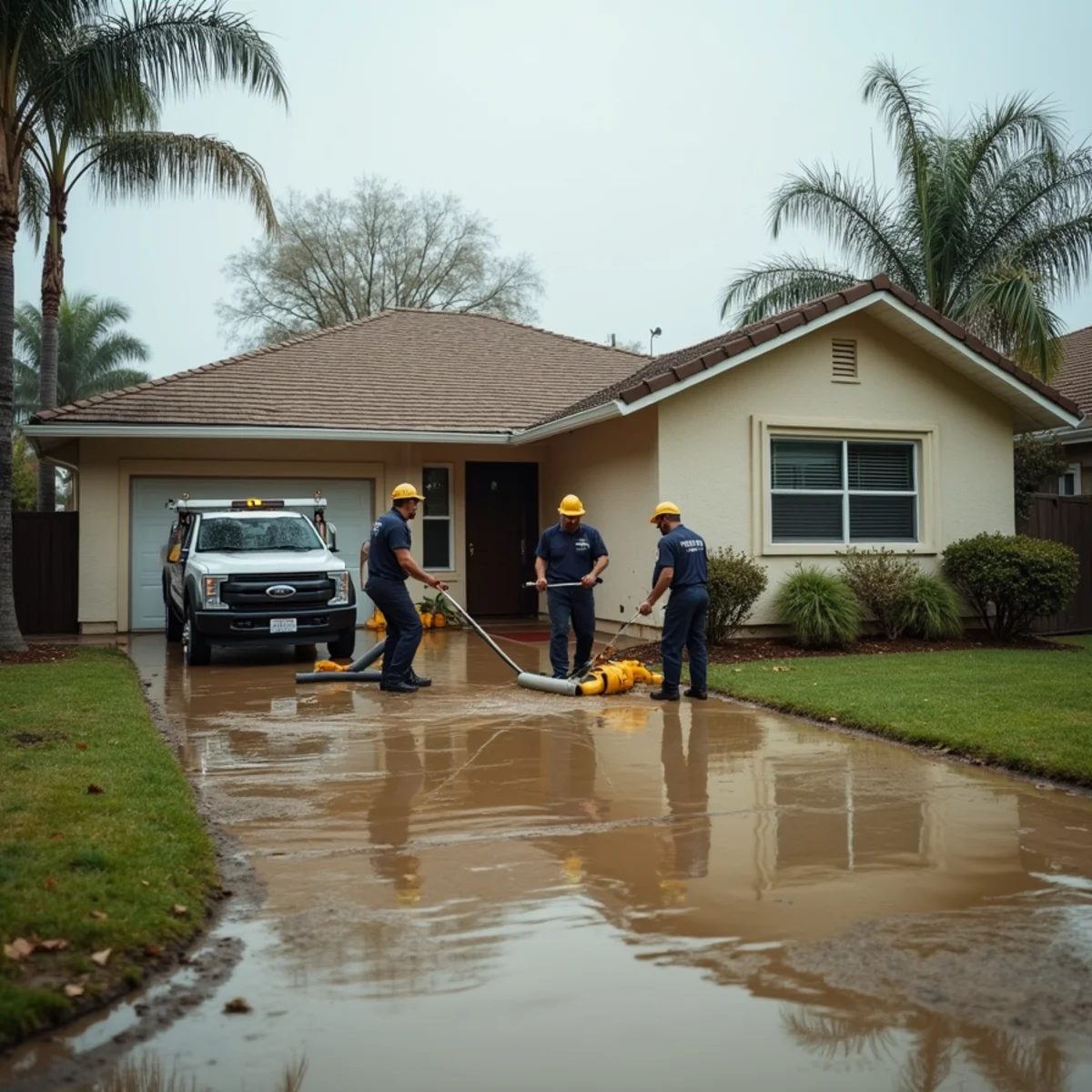
- Removing standing water through water extraction with truck-mounted or portable units
- Pulling out unsalvageable materials like soaked carpet pad, swollen baseboards, and saturated drywall
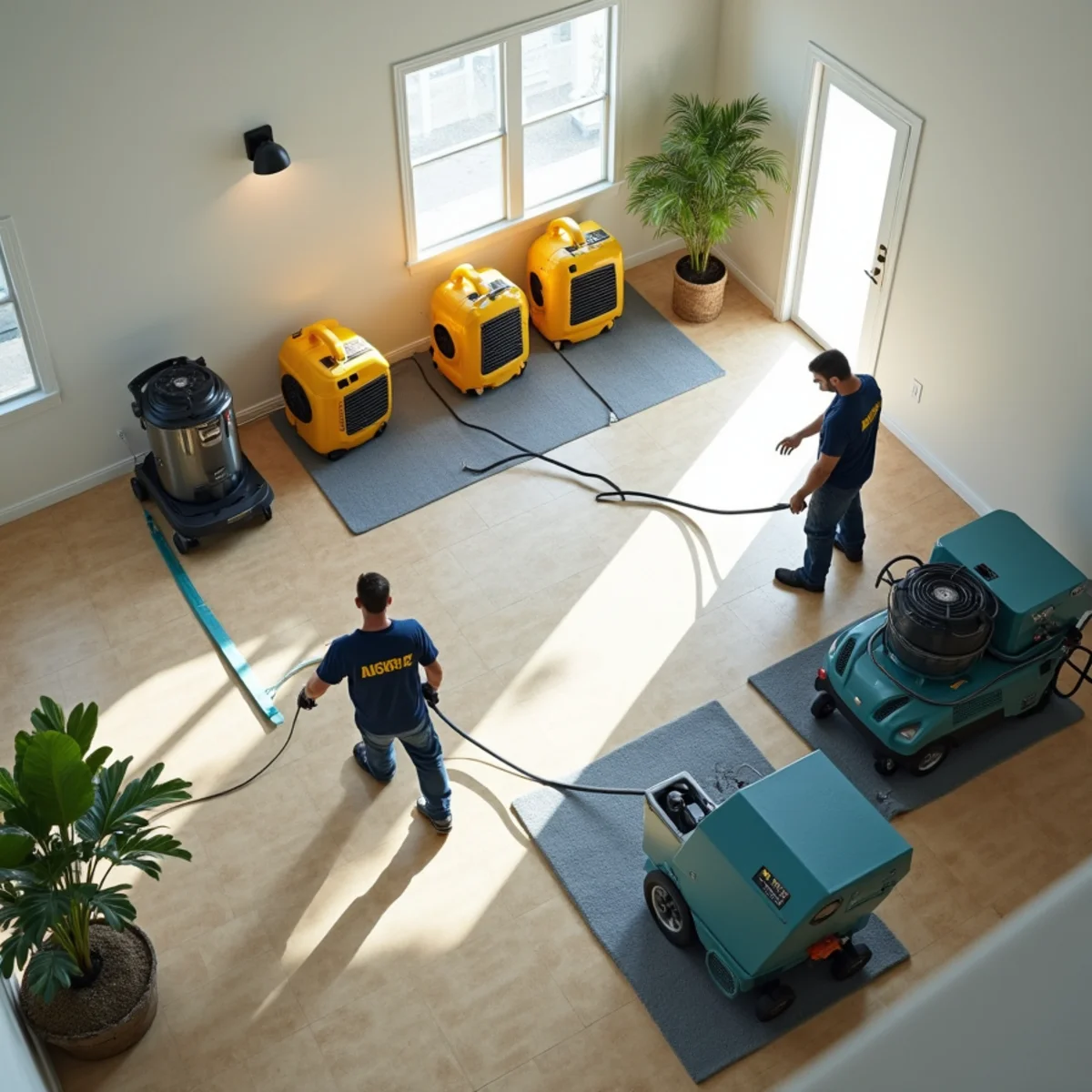
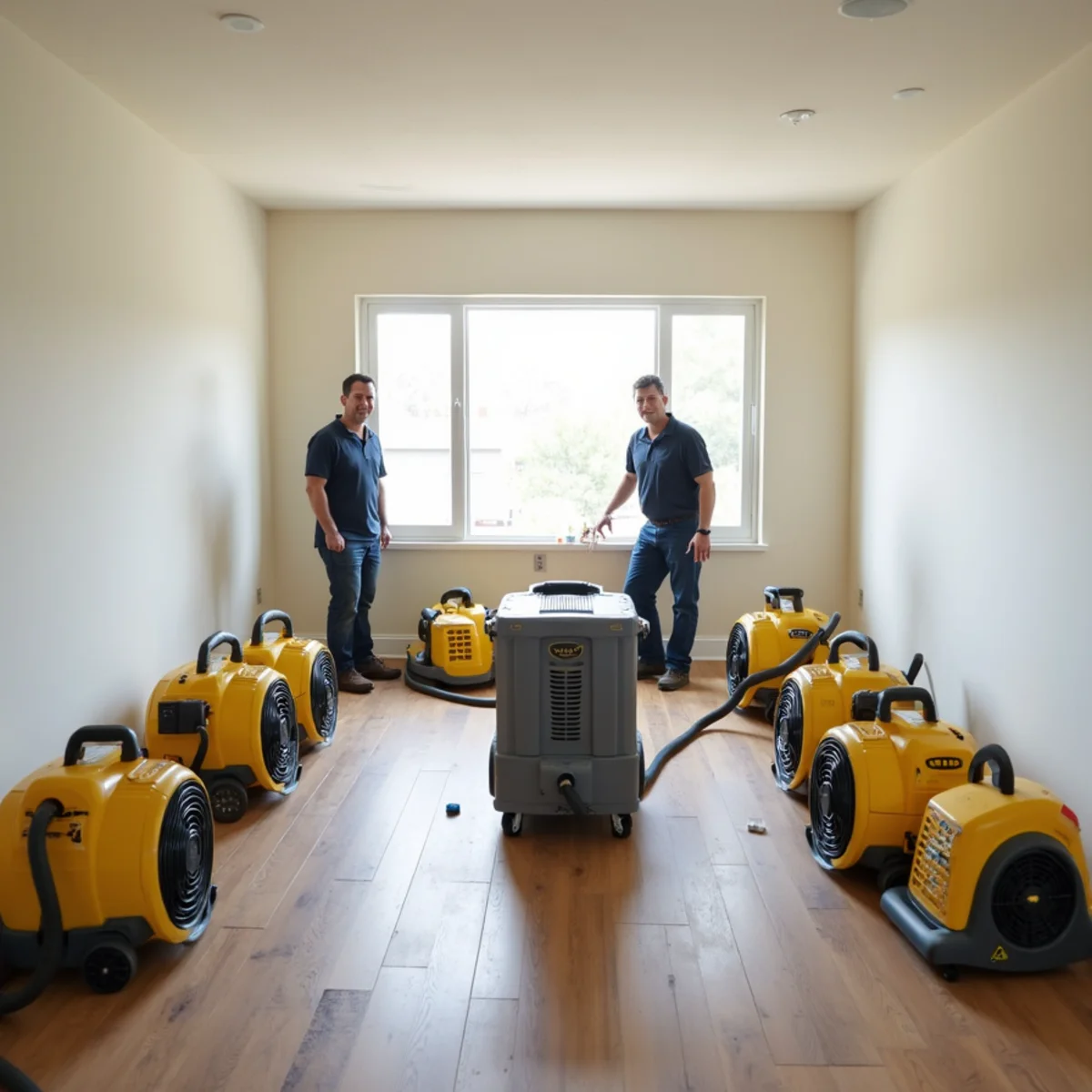
- Setting up structural drying with air movers and dehumidifiers to draw moisture out of framing and subfloor
- Monitoring moisture readings daily until the structure meets a documented dry standard
Mitigation follows the IICRC S500 standard and relies on technicians trained in Water Damage Restoration (WRT) and Applied Structural Drying (ASD), so the drying is measured rather than guessed at.
What Water Restoration Means
Restoration is the rebuild. Once the affected materials are verified dry, this phase returns the home to its pre-loss condition. It is slower and more deliberate because it involves materials, finishes, and sometimes matching what was there before. Restoration work commonly includes:
- Hanging and finishing new drywall where wet sections were cut out
- Replacing flooring, whether that is carpet, laminate, tile, or hardwood
- Reinstalling or rebuilding cabinetry, trim, and baseboards
- Priming and repainting walls and ceilings to match the surrounding rooms
- Final detailing like fixtures, outlet covers, and a cleanup so the space is move-in ready
The word restoration gets used loosely in marketing, but on an estimate it specifically means this reconstruction stage. If you want a full walk-through of how the stages connect, see the restoration process step by step.
Why Mitigation Happens Fast and Restoration Gets Scheduled
The two phases move at very different speeds, and that is by design, not by delay.
Mitigation is urgent because water keeps causing damage every hour it sits. Mold can begin growing within roughly 24 to 48 hours, drywall wicks moisture upward, and wet framing can warp. Acting quickly is why we aim to reach Buena Park and Fullerton homes in about 60 minutes, any hour of the day. The faster the water is gone and the drying starts, the less material has to be torn out later.
Restoration, by contrast, is scheduled work. It cannot responsibly start until moisture readings confirm the structure is dry, and it depends on materials being ordered, finishes being matched, and the insurance scope being approved. Rushing reconstruction over a damp subfloor is how you end up with trapped moisture and a second claim a few months later.
How Insurance Splits Mitigation and Restoration
Most homeowners first run into these two words on their insurance paperwork, where they often show up as separate line items or even separate approvals.
Insurers tend to treat mitigation as emergency work that does not need a lengthy sign-off, because policies generally expect you to prevent further damage right away. That is why a crew can begin extraction and drying before the full claim is settled. The mitigation invoice documents what was removed and dried, with moisture logs and photos as backing.
Restoration is usually estimated and approved afterward as its own scope, once everyone can see what actually needs rebuilding. Many Buena Park providers, including us, offer direct insurance billing, which means the paperwork and documentation for both phases flow to your carrier instead of landing on your kitchen table. Being licensed and insured and billing insurers directly keeps the two phases connected in one file rather than scattered across vendors.
What to Look For in a Contractor Who Handles Both
You can hire separate companies for mitigation and restoration, but handing the whole job to one qualified contractor usually means fewer gaps and less finger-pointing over who is responsible for what. A few things worth confirming:
- They hold current IICRC credentials and follow the S500 standard for the drying phase
- They document moisture readings and provide a clear dry-standard sign-off before any rebuild begins
- They can carry the job from emergency extraction through final paint without subcontracting out the parts that matter
- They bill your insurer directly and keep both phases in one documented claim file
- They are locally owned and reachable 24/7, so the same people who dried your home are the ones who rebuild it
When one company owns both phases, the hand-off from drying to rebuilding is seamless, and nobody can pin a problem on the crew that came before them.
Talk Through Your Estimate With a Local Crew
If you are staring at an estimate and cannot tell where mitigation ends and restoration begins, a quick conversation clears it up fast. Water Damage Buena Park is locally owned, licensed and insured, and available across Buena Park, North Orange County, and SE LA County, typically on site in about 60 minutes.
Call (201) 277-9344 any time, day or night. We are available 24/7 to walk you through both phases, start the emergency drying, and handle the insurance documentation from mitigation through the final coat of paint.
Frequently Asked Questions
Not quite. Extraction, the removal of standing water, is one step inside the larger mitigation phase. Mitigation also includes stopping the source, removing unsalvageable materials, and drying the structure to a documented standard.
No. A small, quickly caught leak might only need mitigation, meaning extraction and drying with nothing torn out. Restoration is only necessary when materials like drywall, flooring, or cabinetry had to be removed and have to be rebuilt.
Yes, and it is often the smoother path. When a single crew carries the job from emergency drying through reconstruction, there is no gap in responsibility and no second company relearning your claim from scratch.
Often, yes. Carriers frequently approve emergency mitigation quickly so further damage is prevented, then review the restoration scope afterward. Coverage depends on your specific policy, so confirm the details with your carrier. We offer direct insurance billing to keep both phases in one documented file.
As soon as possible. Mold can begin developing within roughly 24 to 48 hours, so the sooner extraction and drying begin, the less material usually has to be removed. That speed is why 24/7 availability and fast arrival matter so much.
Dealing with water damage right now?
Water Damage Buena Park responds 24/7 across Buena Park & North OC.